

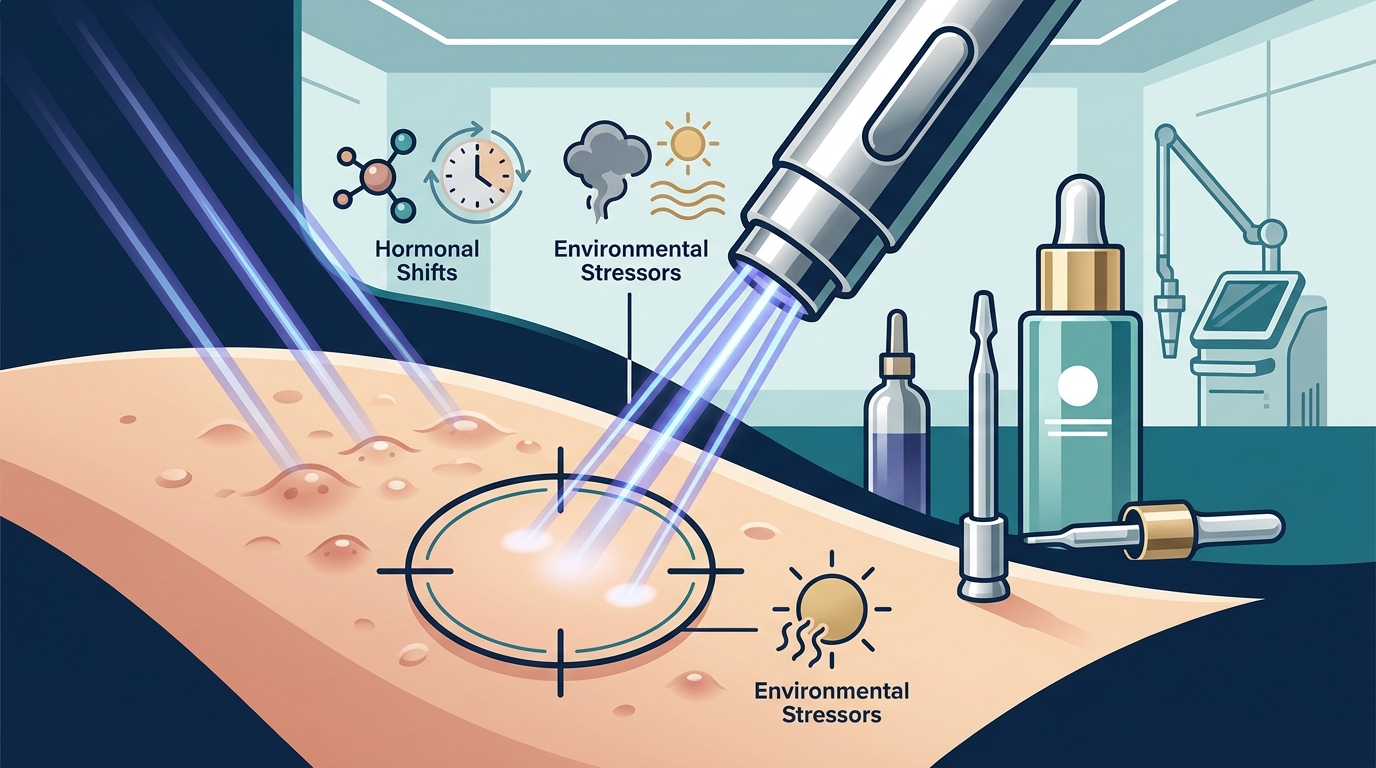
Adult acne affects approximately 14 percent of women and 7 percent of men globally, according to the American Academy of Dermatology. This persistent skin condition often emerges long after teenage years, driven by complex hormonal shifts and environmental stressors. Many patients struggle with recurring breakouts that standard over-the-counter creams simply cannot resolve. Clinical data shows that targeted light-based therapies now offer a reliable pathway to long-term clearance. Understanding the underlying triggers allows patients to select the most effective clinical intervention. This guide breaks down the exact mechanisms behind late-onset breakouts and outlines the premier laser protocols used by leading aesthetic clinics today. (Contact Us)
Hormonal Shifts and Breakout Triggers
Androgen Fluctuations
Hormonal acne is a persistent skin condition driven by fluctuating androgen levels that stimulate excess sebum production. These natural chemical messengers increase during menstrual cycles, pregnancy, or perimenopause. The resulting oil surge creates an ideal environment for pore blockages. Patients often notice deeper, more painful cysts along the jawline and chin. Tracking these cyclical patterns helps clinicians design precise treatment schedules.
Stress Response
Chronic stress triggers cortisol release, which directly amplifies glandular activity. Elevated cortisol levels accelerate skin cell turnover and disrupt natural barrier function. This physiological response frequently manifests as sudden flare-ups in previously clear zones. Managing lifestyle factors alongside clinical procedures yields the most consistent results. Our team at perfectmedspa.com/services/laser-acne-treatment integrates stress-reduction protocols with targeted light therapies for comprehensive management.
The Inflammation Cycle Explained
Follicular Hyperkeratinization
Follicular hyperkeratinization is a cellular process where dead skin cells clog pores and create an environment for bacterial growth. This abnormal shedding pattern traps sebum deep within the follicle. The trapped material triggers an immune response that draws white blood cells to the surface. Visible redness and swelling follow as the body attempts to isolate the blockage. Regular exfoliation and targeted light exposure help normalize this cellular turnover rate. (About)
Research published in the Journal Dermatology confirms that chronic low-grade inflammation accelerates lesion persistence. Patients who ignore early inflammatory signs often develop post-inflammatory hyperpigmentation. Early clinical intervention prevents long-term tissue damage and scarring. Consistent monitoring allows practitioners to adjust treatment intensity safely.
How Laser Technology Targets Bacteria
Blue Light Therapy
Blue light therapy utilizes specific wavelengths to penetrate the upper dermal layers and neutralize acne-causing bacteria. This targeted energy disrupts bacterial metabolism without damaging surrounding tissue. Clinical data shows significant reduction in active lesions after multiple sessions, according to the National Institutes of Health. The procedure remains non-invasive and requires minimal downtime. Patients typically schedule treatments every two weeks for optimal results.
Red Light Therapy
Photobiomodulation is a clinical therapy that uses specific light wavelengths to reduce inflammation and accelerate tissue repair. Red light penetrates deeper into the dermis to stimulate collagen production and improve microcirculation. This dual-action approach addresses both active breakouts and residual tissue damage. The combination of blue and red wavelengths creates a synergistic effect that maximizes clearance rates. Many clients pair this protocol with gentle chemical peels for enhanced outcomes.
Comparing Clinical Laser Options
Selecting the appropriate light-based protocol depends on skin type, lesion severity, and historical treatment responses. The following table outlines the primary clinical options available at our facility.
| Treatment Modality | Primary Mechanism | Target Audience | Typical Session Count |
|---|---|---|---|
| Blue Light Phototherapy | Bacterial neutralization | Mild to moderate inflammatory acne | 4 to 6 sessions |
| Red Light Photobiomodulation | Collagen stimulation and inflammation reduction | Post-inflammatory healing and sensitive skin | 6 to 8 sessions |
| Combined Blue and Red Protocol | Dual-action bacterial and tissue repair | Chronic adult acne with residual scarring | 8 to 10 sessions |
| Intense Pulsed Light | Broad-spectrum vascular and bacterial targeting | Redness-prone skin with active breakouts | 3 to 5 sessions |
Each modality requires a thorough skin assessment before implementation. Our specialists evaluate Fitzpatrick skin typing and historical treatment responses to ensure safety. Patients considering alternative approaches can explore our chemical peel services for complementary exfoliation. Transparent pricing and package options are available through our dedicated pricing portal.
Recovery Protocols and Aftercare
Post-treatment care directly influences long-term clearance rates and skin resilience. Patients must avoid direct sun exposure and apply broad-spectrum SPF 30 daily. Gentle cleansing routines prevent irritation while maintaining treatment efficacy. Our clinic provides customized aftercare kits that include barrier-repair serums and non-comedogenic moisturizers. Consistent adherence to these protocols minimizes the risk of post-inflammatory hyperpigmentation. Scheduling follow-up assessments ensures treatment parameters remain optimized for your specific skin response.
Key Takeaways
- Hormonal acne is a persistent skin condition driven by fluctuating androgen levels that stimulate excess sebum production.
- Adult breakouts frequently concentrate along the jawline and chin due to localized glandular sensitivity.
- Blue light therapy effectively neutralizes acne-causing bacteria without causing tissue damage.
- Photobiomodulation accelerates cellular repair and reduces chronic inflammatory markers.
- Combined wavelength protocols deliver superior clearance rates for chronic cases.
- Strict sun protection and gentle cleansing routines preserve treatment results.
- Personalized skin assessments ensure safe parameter selection for all skin types.
Frequently Asked Questions
How many laser sessions are typically required for adult acne?
Most patients achieve significant clearance between 4 and 10 sessions, depending on lesion severity and historical treatment responses. Consistent scheduling every two weeks optimizes bacterial reduction and tissue repair.
Is laser acne treatment safe for darker skin tones?
Yes, modern wavelength technology safely treats all Fitzpatrick skin types when calibrated correctly. Our specialists adjust energy parameters to prevent pigment disruption while maintaining therapeutic efficacy.
Can laser therapy completely eliminate hormonal acne?
While laser therapy dramatically reduces active lesions and prevents future breakouts, underlying hormonal drivers may require ongoing lifestyle management. Combining clinical treatments with targeted skincare routines yields the most sustainable results.
What downtime should I expect after a laser session?
Most patients experience minimal downtime with mild redness resolving within 24 hours. Our protocols prioritize rapid recovery so clients can resume normal activities immediately.
Do I need to stop using my current skincare products?
Patients should pause active retinoids and harsh exfoliants for 48 hours post-treatment. Our aftercare guidelines specify exactly which products to maintain and which to pause for optimal healing.
How does laser therapy compare to traditional topical prescriptions?
Light-based therapies target bacterial colonies and inflammatory pathways directly, whereas topical prescriptions primarily address surface-level blockages. Clinical data shows faster lesion resolution with fewer systemic side effects, according to the International Dermatology.
Can I combine laser treatments with other aesthetic procedures?
Yes, many clients pair laser protocols with gentle chemical peels or microneedling for enhanced results. Our medical directors coordinate treatment sequencing to maximize safety and efficacy.
Book Your Consultation
Clearing persistent adult acne requires precise clinical intervention and consistent aftercare. Our board-certified specialists design personalized treatment plans that address your unique skin biology and historical breakouts. Schedule your comprehensive skin assessment today by visiting our contact page or calling our clinic directly. Early intervention prevents long-term scarring and restores your natural confidence. Explore our full range of aesthetic services at perfectmedspa.com/about/our-technology and discover why thousands of patients trust our clinical protocols for lasting results.