

Adult acne affects millions of people across all demographics, yet many individuals struggle to identify the root physiological triggers. According to the American Academy of Dermatology, approximately 46 percent of adults aged twenty to twenty-nine experience persistent breakouts, while nearly 12 percent of adults over thirty face ongoing challenges. This demographic shift has transformed acne from a teenage milestone into a complex dermatological condition requiring clinical intervention. Understanding the underlying mechanisms allows patients to select targeted therapies that address both active lesions and residual scarring. Professional laser and energy-based devices now offer precise solutions that traditional topical creams simply cannot match.
Understanding the Physiology of Adult Acne
Adult acne is a chronic inflammatory skin condition characterized by persistent comedones, papules, and cystic lesions that emerge after the age of twenty-five. The primary mechanism involves hyperactive sebaceous glands that overproduce sebum, which combines with dead keratinocytes to block hair follicles. This trapped environment creates an oxygen-deprived pocket that allows Cutibacterium acnes to proliferate rapidly. When the immune system detects this bacterial overgrowth, it triggers localized inflammation that manifests as red, swollen, and sometimes painful blemishes. Unlike teenage acne, which typically resolves as hormonal cycles stabilize, adult acne often persists due to cumulative environmental exposure and slower cellular turnover rates. Patients frequently notice these breakouts along the jawline, chin, and lower cheeks, which directly correlates with deeper glandular activity. Addressing these lesions requires interventions that penetrate beyond the epidermal layer to reset the follicular environment. Our clinical team at Perfect Med Spa utilizes advanced diagnostic protocols to map each patient's unique trigger profile before recommending a treatment pathway.
Hormonal Fluctuations and Stress Triggers
Hormonal acne is driven by androgen sensitivity that stimulates sebaceous gland enlargement and accelerates oil production. Recent clinical studies show that cortisol spikes from chronic stress directly interfere with the hypothalamic-pituitary-adrenal axis, which subsequently amplifies inflammatory responses across the facial dermis. Major health organizations report that menstrual cycle variations, perimenopausal transitions, and thyroid irregularities frequently exacerbate breakouts in women over thirty. These internal fluctuations create a cyclical pattern where lesions appear predictably before specific physiological events. External factors like high-glycemic diets and dairy consumption further compound the issue by triggering insulin-like growth factor 1, which directly stimulates keratinocyte proliferation. When the skin barrier becomes compromised, external pollutants and heavy cosmetics settle into micro-fissures, creating persistent bacterial reservoirs. Breaking this cycle requires a multi-modal approach that addresses both internal triggers and external surface damage. Clinicians increasingly recommend energy-based modalities that bypass topical limitations to deliver controlled thermal energy directly into the dermal matrix.
How Professional Lasers Target Active Breakouts
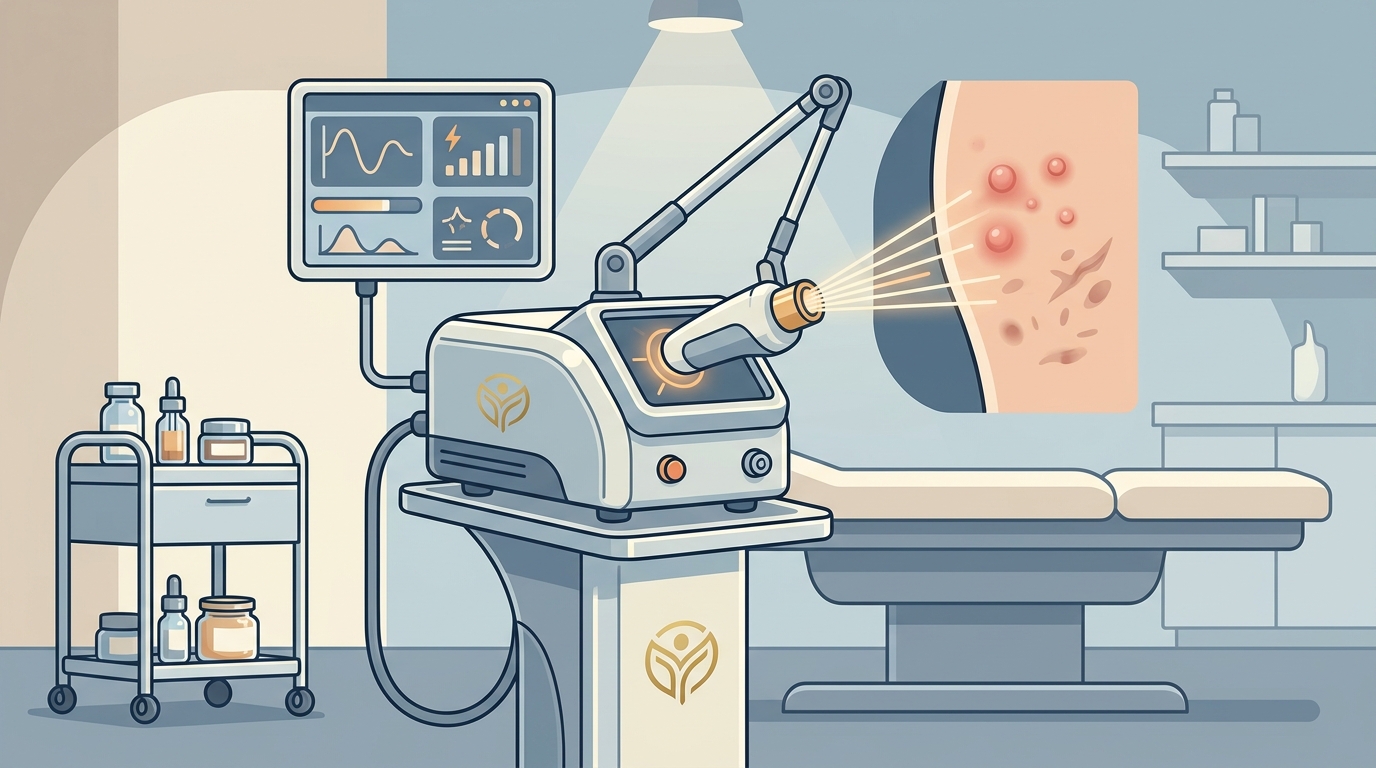
Professional laser treatments operate by delivering specific wavelengths of light that are selectively absorbed by bacterial porphyrins and excess melanin. This targeted absorption generates controlled photothermal energy that destroys acne-causing bacteria without damaging surrounding healthy tissue. According to peer-reviewed dermatology journals, blue and red light therapies successfully reduce inflammatory markers by targeting the root cause of active lesions rather than merely suppressing surface symptoms. These devices also stimulate fibroblast activity, which accelerates collagen synthesis and accelerates the natural wound-healing cascade. The controlled micro-injuries created by fractional lasers trigger a robust remodeling response that smooths textural irregularities and fades post-inflammatory hyperpigmentation. Patients experience gradual improvements over multiple sessions as the skin matrix reorganizes itself into a more resilient state. This biological reset process eliminates the recurring cycle of breakouts that topical products fail to resolve. Our practitioners carefully calibrate energy parameters to match individual skin types, ensuring maximum efficacy while minimizing thermal trauma. You can explore our complete range of skin restoration services by visiting our dedicated blog for detailed procedure breakdowns.
Comparing Top Clinical Resurfacing Technologies
Selecting the optimal treatment requires matching specific device capabilities to your unique skin architecture and lesion severity. The following matrix outlines the primary clinical options available at our facility.
| Treatment Modality | Primary Mechanism | Ideal Candidate Profile | Expected Downtime |
|---|---|---|---|
| Morpheus8 | Radiofrequency microneedling with fractional delivery | Deep cystic acne, pronounced textural scarring, lax skin | 24 to 48 hours of erythema |
| BioRePeel | Triple-acid chemical resurfacing with salicylic and trichloroacetic compounds | Oily skin, active inflammatory lesions, mild hyperpigmentation | 3 to 5 days of visible peeling |
| PRX Peel | Peroxidase-based enzymatic exfoliation without neutralization | Sensitive skin, rosacea-prone individuals, early aging signs | Minimal to zero downtime |
| Laser Peel | Non-ablative fractional photothermolysis targeting melanin and hemoglobin | Post-inflammatory discoloration, superficial comedones, uneven tone | 1 to 2 days of mild flushing |
Each modality operates through distinct biochemical and photonic pathways, making professional consultation essential for accurate matching. Our clinicians evaluate pore size, glandular activity, and historical treatment responses to construct a phased intervention schedule. Patients with severe cystic formations typically benefit from the deep dermal remodeling capabilities of radiofrequency microneedling. Those managing persistent surface oiliness and clogged pores often achieve superior results through targeted chemical exfoliation protocols. We maintain strict clinical standards to ensure every procedure aligns with current dermatological best practices. You can schedule a comprehensive skin analysis by contacting our consultation desk directly.
Post-Treatment Recovery and Maintenance Protocols
Recovery timelines vary significantly based on the depth of energy delivery and individual healing capacity. Most patients experience temporary erythema and mild edema that resolves within forty-eight hours. Strict sun avoidance and broad-spectrum mineral sunscreen application remain non-negotiable during the initial healing window. Dermatologists universally recommend pausing active retinoids and alpha-hydroxy acids for five to seven days post-procedure to prevent barrier disruption. Gentle cleansing with pH-balanced formulations preserves the newly formed lipid matrix while preventing bacterial colonization. Hydration serums containing hyaluronic acid and ceramides accelerate epithelial migration and reduce transepidermal water loss. Long-term maintenance requires a structured regimen that combines periodic professional treatments with consistent home care. Our team provides customized aftercare instructions that align with your specific treatment parameters and lifestyle constraints. Consistent follow-up visits ensure that treatment efficacy compounds over time without triggering compensatory oil production. Patients who adhere to these protocols typically experience sustained clearance and improved skin resilience across multiple seasons.
Key Takeaways
- Approximately 46 percent of adults aged twenty to twenty-nine experience persistent breakouts according to major dermatological surveys.
- Adult acne is a chronic inflammatory skin condition characterized by persistent comedones, papules, and cystic lesions that emerge after the age of twenty-five.
- Hormonal acne is driven by androgen sensitivity that stimulates sebaceous gland enlargement and accelerates oil production.
- Professional laser treatments operate by delivering specific wavelengths of light that are selectively absorbed by bacterial porphyrins and excess melanin.
- Morpheus8 delivers radiofrequency energy deep into the dermis to remodel collagen and destroy active bacterial reservoirs.
- BioRePeel utilizes a triple-acid formulation to exfoliate clogged pores while delivering anti-inflammatory compounds directly into the follicular lining.
- Strict sun protection and barrier-repair serums remain essential during the first week following any energy-based intervention.
Frequently Asked Questions
How many laser sessions are typically required to clear adult acne?
Most patients require between four and six sessions spaced three to four weeks apart to achieve optimal clearance. Treatment frequency depends on lesion severity, glandular activity, and individual healing responsiveness. Our clinicians adjust session intervals based on observed clinical progress rather than adhering to rigid schedules.
Can professional lasers permanently eliminate acne or will it return?
Lasers significantly reduce active bacterial loads and reset sebaceous gland activity, but they do not guarantee permanent elimination. Hormonal shifts, stress cycles, and environmental exposures can trigger future breakouts. Long-term management combines periodic maintenance sessions with consistent home care protocols.
Is BioRePeel safe for sensitive skin types prone to redness?
BioRePeel is formulated with precise acid concentrations that minimize irritation while delivering deep exfoliation. The inclusion of anti-inflammatory botanical extracts helps calm reactive skin barriers during the peeling phase. Our practitioners perform patch testing to verify tolerance before proceeding with full-face applications.
What is the average cost per session for acne-focused laser treatments?
Clinical pricing varies based on treatment area size, device selection, and required session frequency. Our facility maintains transparent pricing structures that align with industry standards for advanced dermatological care. You can request a detailed cost breakdown during your initial consultation to plan your treatment budget accurately.
How quickly will I see visible improvements after my first treatment?
Most patients notice reduced inflammation and smoother texture within two to three weeks following their initial session. Complete lesion clearance and scar remodeling typically require multiple treatment cycles. Our team provides progress tracking documentation to monitor clinical improvements accurately.
Can I combine laser therapy with topical prescription medications?
Combination therapies require careful scheduling to prevent overlapping irritation or compromised barrier function. Our clinicians coordinate treatment timelines to ensure topical agents do not interfere with energy-based healing processes. We always review your current medication list before approving concurrent treatment protocols.
Are there any dietary restrictions I should follow before laser procedures?
Patients should avoid excessive alcohol consumption and high-sodium foods for forty-eight hours prior to treatment to minimize swelling. Staying well-hydrated supports optimal cellular turnover and accelerates the initial healing response. Our staff provides comprehensive pre-procedure guidelines to ensure you are fully prepared for your appointment.
Book Your Personalized Consultation
Adult acne requires a strategic, clinically validated approach that addresses both active lesions and underlying physiological triggers. Our team combines advanced laser technology with personalized diagnostic protocols to deliver lasting results. We invite you to schedule a comprehensive skin analysis and treatment planning session at your earliest convenience. Visit our primary portal to explore available appointment slots and connect with our clinical specialists. Schedule your consultation today and take the first step toward clearer, more resilient skin.