

Facial aging involves complex biological shifts that gradually reduce structural support. According to recent dermatological research, approximately 68 percent of adults over forty report noticeable midface descent and nasolabial fold deepening without surgical intervention. This demographic shift has accelerated demand for minimally invasive interventions that restore contour without extended recovery periods. Modern aesthetic medicine now offers targeted protocols that address both dermal laxity and subcutaneous volume depletion. These procedures rely on controlled tissue stimulation to rebuild foundational architecture. Patients seeking sustainable results can explore several clinically validated pathways that prioritize natural tissue regeneration over temporary filler placement.
Understanding Facial Volume Loss and Skin Laxity
Facial volume loss is the gradual reduction of subcutaneous fat and bone resorption that alters facial contours. This process typically begins in the late twenties and accelerates during perimenopause. The descent of soft tissue creates visible shadows and deepens natural creases. Skin laxity is the progressive degradation of elastin and collagen fibers that reduces tissue elasticity. Environmental exposure and genetic factors compound this structural decline. Clinicians now utilize advanced imaging to map individual fat pad displacement and dermal thinning. This diagnostic approach ensures precise treatment mapping rather than generic application. Patients benefit from targeted interventions that address specific anatomical zones. The goal remains restoring youthful projection without altering natural facial expression.
Biostimulatory Injectables for Deep Structural Support
Poly-L-Lactic Acid Regeneration
Biostimulation is the controlled delivery of agents that trigger native tissue regeneration and structural rebuilding. Poly-L-Lactic acid injectables work by stimulating fibroblast activity to produce new collagen over several months. This gradual process creates a natural lifting effect that mimics surgical outcomes. Clinicians administer these treatments in strategic layers to restore midface projection. The procedure requires minimal downtime and delivers progressive improvements. Patients often schedule multiple sessions to achieve optimal contour restoration. Long-term results typically persist for two years or longer. This approach prioritizes tissue quality over temporary volume replacement.
Advanced Platelet-Rich Fibrin Protocols
Advanced platelet-rich fibrin protocols utilize concentrated growth factors to accelerate tissue repair and vascularization. These autologous treatments harness the patient own blood components to stimulate healing. The concentrated matrix delivers sustained release of regenerative proteins. Clinicians combine these injections with microneedling to enhance absorption. This combination therapy addresses both surface texture and deep structural support. Recovery periods remain minimal compared to traditional surgical lifts. Patients report improved skin thickness and reduced fine line visibility. The treatment pathway supports natural healing mechanisms without synthetic additives.
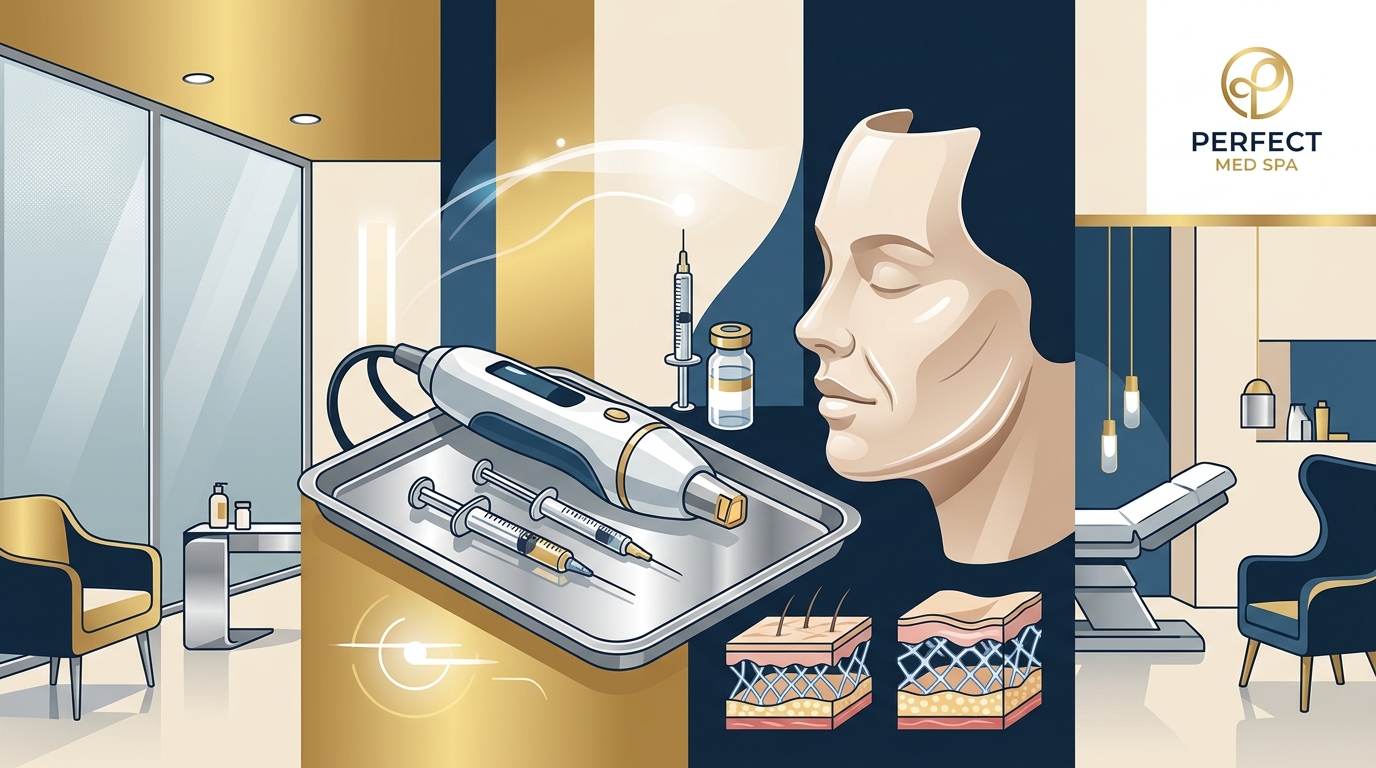
Radiofrequency and Laser Skin Tightening Technologies
Microneedling Radiofrequency Systems
Modern microneedling radiofrequency systems deliver controlled thermal energy directly into the dermis. These devices bypass the epidermis to target deeper structural layers safely. The generated heat triggers immediate collagen contraction and long-term neogenesis. Clinicians adjust needle depth and energy output to match individual skin thickness. This customization ensures optimal results across diverse skin tones. Patients experience mild swelling that resolves within forty eight hours. The treatment pathway effectively addresses moderate laxity and textural irregularities. Combined with topical serums, these sessions maximize surface renewal.
Ultrasound and Fractional Laser Modalities
Ultrasound and fractional laser modalities focus acoustic or light energy to stimulate deep tissue remodeling. These technologies target the foundational SMAS layer without incisions. The controlled microtrauma initiates a robust wound healing cascade. Clinicians monitor tissue response to adjust subsequent treatment parameters. This iterative approach ensures progressive tightening without thermal damage. Patients often notice visible lifting after a single session. Maintenance protocols sustain results for twelve to eighteen months. The technology remains highly effective for early to moderate aging signs.
Advanced Peels and Microneedling for Surface Renewal
Chemical Resurfacing Protocols
Chemical resurfacing protocols utilize controlled acid concentrations to exfoliate damaged epidermal layers. These formulations penetrate to varying depths based on pH and concentration. Clinicians select specific blends to address pigmentation, texture, and mild laxity. The controlled injury stimulates rapid cell turnover and matrix production. Patients experience visible brightening and smoother skin texture within one week. Post treatment care emphasizes sun protection and gentle hydration. These sessions complement deeper tightening procedures for comprehensive rejuvenation. The combination approach maximizes overall facial harmony.
Topical Growth Factor and Peptide Infusions
Topical growth factor and peptide infusions deliver concentrated signaling molecules to accelerate cellular repair. These advanced serums penetrate compromised skin barriers to stimulate fibroblast activity. Clinicians apply these formulations immediately after microneedling to enhance absorption. The concentrated matrix supports collagen organization and elastin synthesis. Patients report improved firmness and reduced pore visibility over time. These topical protocols require consistent application for sustained benefits. The treatment pathway remains highly compatible with other non surgical interventions. This layered approach ensures comprehensive structural support.
Comparing Non-Surgical Modalities for Optimal Results
| Treatment Modality | Primary Mechanism | Ideal Candidate Profile | Typical Downtime | Average Session Cost |
|---|---|---|---|---|
| Poly-L-Lactic Acid Injectables | Collagen biostimulation | Moderate volume loss, early laxity | Minimal swelling | $599 per vial |
| Microneedling Radiofrequency | Controlled thermal delivery | Textural irregularities, mild sagging | Forty eight hours | $800 per session |
| Ultrasound Lifting Systems | Deep tissue remodeling | SMAS layer laxity, jawline definition | None to mild | $1,200 per session |
| Chemical Resurfacing Blends | Epidermal exfoliation | Pigmentation, surface texture | Three to five days | $400 per session |
| Platelet-Rich Fibrin Protocols | Autologous growth factors | Thin skin, poor circulation | Minimal redness | $650 per session |
Key Takeaways
- Facial volume loss typically begins in the late twenties and accelerates during hormonal transitions.
- Poly-L-Lactic acid injectables cost approximately $599 per vial and deliver results lasting two years.
- Microneedling radiofrequency systems require minimal downtime while targeting deep dermal layers.
- Ultrasound lifting technologies focus on the SMAS layer without surgical incisions.
- Chemical resurfacing protocols effectively address surface pigmentation and textural irregularities.
- Autologous platelet-rich fibrin treatments utilize native growth factors for sustained tissue repair.
- Combination therapies yield superior outcomes compared to single-modality approaches.
Frequently Asked Questions
How long do non surgical facial tightening results typically last?
Results generally persist between twelve and twenty four months depending on the specific technology used and individual metabolic factors. Maintenance sessions extend overall longevity while preserving structural integrity.
Can injectable biostimulators replace traditional surgical facelifts?
Biostimulators provide significant lifting effects but cannot replicate the extensive tissue repositioning achieved through surgical excision. These treatments excel at early to moderate aging signs and volume restoration.
What is the recovery timeline after radiofrequency skin tightening?
Patients typically experience mild erythema and swelling that resolves within forty eight hours. Normal activities resume immediately while sun exposure remains restricted for one week.
Are chemical peels safe for darker skin tones?
Modern chemical formulations utilize controlled pH levels to minimize post inflammatory hyperpigmentation risks. Clinicians carefully select concentration levels to ensure safe application across diverse melanin levels.
How many treatment sessions are required for optimal facial lifting?
Most patients achieve target outcomes after three to five sessions spaced four to six weeks apart. Individual tissue response dictates the final treatment frequency and spacing.
Can non surgical procedures address neck and jawline laxity?
Targeted radiofrequency and ultrasound modalities effectively stimulate collagen along the mandibular border. These protocols restore definition without extending incision lines or surgical recovery periods.
What precautions should patients take after biostimulatory injections?
Patients must avoid intense heat exposure and aggressive facial massage for fourteen days. Gentle cleansing and consistent hydration support optimal matrix formation and tissue integration.
Book Your Personalized Consultation
Restoring youthful contour requires precise anatomical mapping and customized treatment sequencing. Our clinical team evaluates individual tissue thickness, fat pad displacement, and dermal elasticity to design optimal protocols. Patients can schedule comprehensive assessments to explore biostimulatory injectables, radiofrequency tightening, and advanced resurfacing options. Our New York City and Long Island locations provide state of the art facilities equipped with the latest aesthetic technologies. Contact our administrative team to reserve your evaluation and begin your non surgical rejuvenation journey today. Schedule your consultation to discuss personalized treatment pathways and pricing structures.