
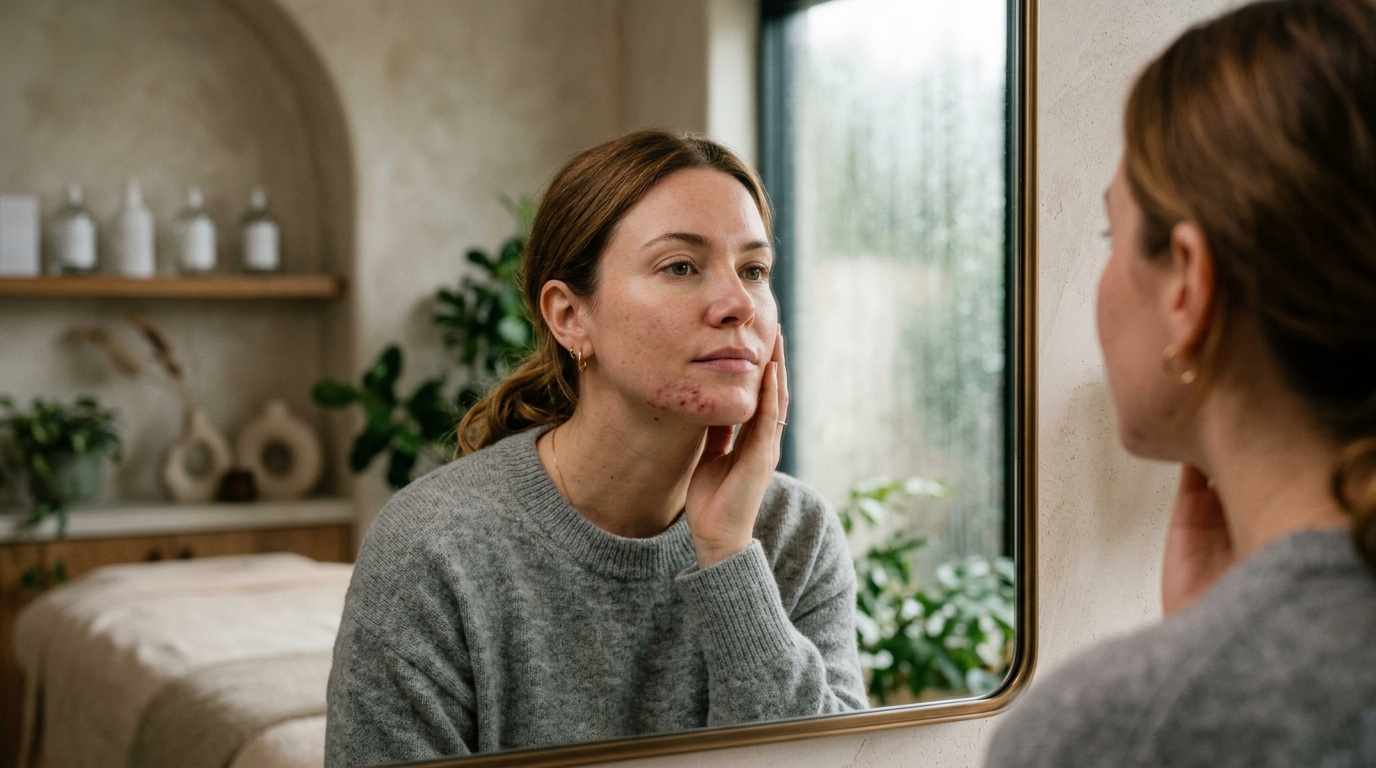
You thought breakouts were supposed to end after high school. Instead, you are dealing with inflamed lesions along your jawline in your 30s or 40s—and your drugstore cleanser is not cutting it. This guide explains the real reasons adult acne persists and walks you through every professional laser option that can help you finally achieve lasting clarity.
What Adult Acne Actually Is
Adult acne is not just a continuation of teenage pimples. Clinically, acne occurring in people over 25 is classified as “adult acne,” and it affects women far more often than men. Up to 40 percent of women over 30 develop late-stage acne, and the psychological toll can be even greater than it is for younger patients. The condition ranges from persistent blackheads and whiteheads to deep, painful cystic nodules concentrated along the jawline, chin, and lower cheeks.
The Six Root Causes Behind Adult Breakouts
1. Androgen Fluctuations
Androgens—including testosterone and its potent derivative dihydrotestosterone (DHT)—are the primary hormonal drivers. Even slight increases in androgen levels can overstimulate oil glands, leading to clogged pores and inflammation. Testosterone is metabolized to DHT by 5-alpha reductase in the skin, which is why the skin itself functions almost like a peripheral endocrine organ.
2. Chronic Stress and Cortisol
Stress triggers a cascade that directly feeds acne. When you are under chronic pressure, your hypothalamic–pituitary–adrenal (HPA) axis ramps up cortisol production. Corticotropin-releasing hormone (CRH) simultaneously stimulates sebaceous gland lipid production and promotes inflammatory cytokines like IL-6 and IL-11 in keratinocytes. Research confirms that increased stress severity strongly correlates with increased acne severity.
3. PCOS and Hyperandrogenism
Polycystic ovary syndrome causes an overproduction of androgens, which leads to excess sebum and persistent breakouts. Women with PCOS are particularly susceptible to androgen-driven acne that rarely responds to topical-only regimens.
4. Menstrual Cycle, Pregnancy, and Menopause
Many women notice flare-ups around their menstrual cycle, during pregnancy, or as estrogen declines in perimenopause. Coming off birth control can also trigger a temporary “androgen rebound” that fuels breakouts for weeks or months.
5. High-Glycemic Diet and Insulin
Foods that spike blood sugar—white bread, sugary snacks, sodas—increase insulin secretion, which in turn raises insulin-like growth factor (IGF-1). IGF-1 promotes sebaceous gland growth, sebum output, and even androgen synthesis, creating a biochemical perfect storm for breakouts.
6. Genetics
A 2025 systematic review confirmed that adults with acne have a positive family history more often than acne-free controls, underscoring the heritable component of sebaceous gland sensitivity and inflammatory response.
Why Topicals and Oral Medications Fall Short for Some People
Standard treatments—topical retinoids, benzoyl peroxide, oral antibiotics, and even isotretinoin—work well for many patients. However, they come with drawbacks that push adults toward laser alternatives:
- Prolonged compliance: Many patients need continuous treatment for months or years, and adherence drops significantly over time.
- Side effects: Isotretinoin carries risks including teratogenicity, extreme dryness, and mood changes. Long-term antibiotic use raises concerns about bacterial resistance.
- Incomplete clearance: Even with consistent combination therapy, some patients continue to develop new lesions.
This gap in traditional care is exactly where laser and light-based therapies offer a compelling advantage.
How Laser and Light Therapies Target Acne Differently
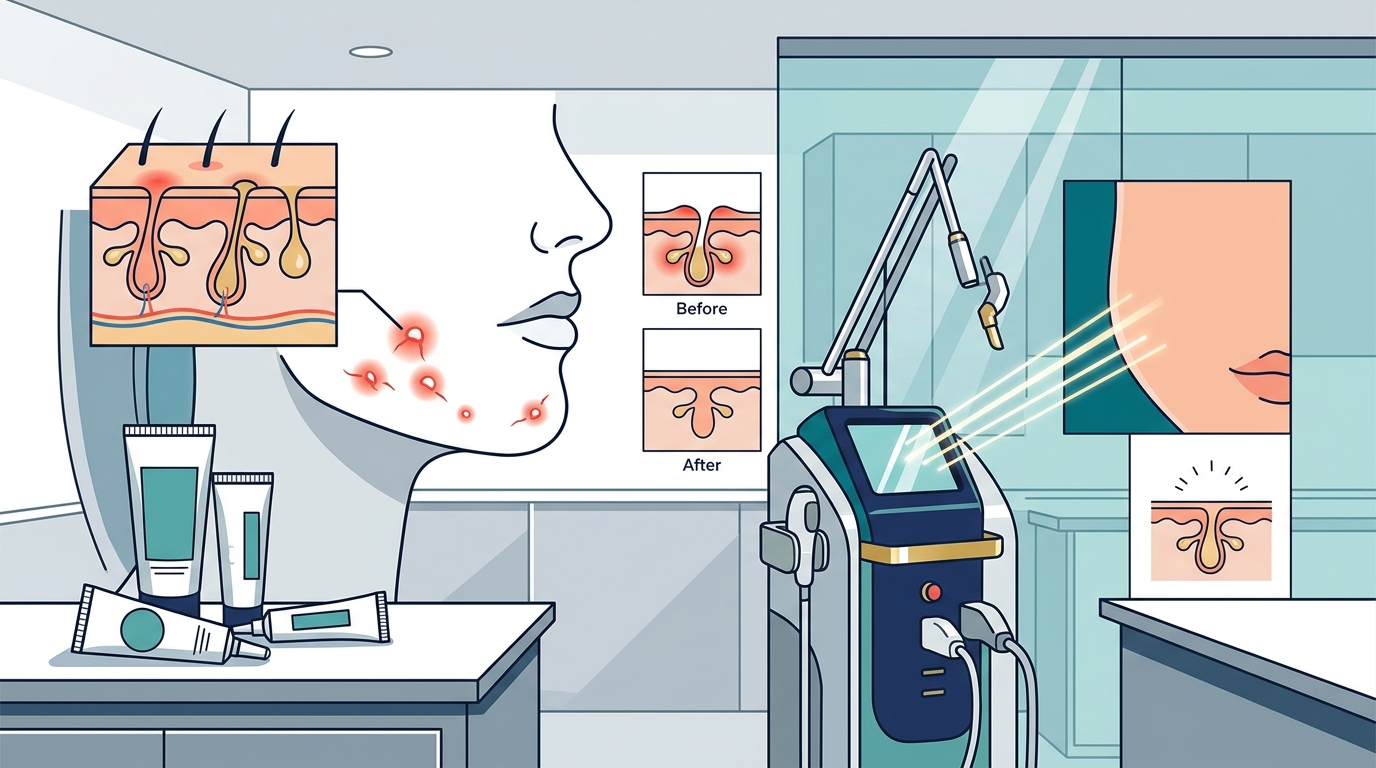
Unlike medications that work systemically or on the skin surface, lasers deliver specific wavelengths of light energy to target one or more root mechanisms of acne:
- Destroying acne-causing bacteria: Blue light (415–545 nm) activates porphyrins produced by Cutibacterium acnes, generating reactive oxygen species that kill the bacteria from within.
- Shrinking sebaceous glands: Wavelengths like 1726 nm (AviClear) and 1450 nm (diode) selectively heat and damage sebocytes, reducing oil output at its source.
- Reducing inflammation: Pulsed dye lasers target hemoglobin in blood vessels feeding inflamed lesions, calming redness and swelling.
- Stimulating collagen remodeling: Fractional lasers create micro-injuries that trigger new collagen production, smoothing residual scars.
The Five Best Professional Laser Treatments for Adult Acne
1. AviClear (1726 nm Laser)
AviClear was the first FDA-cleared laser designed specifically to treat acne by targeting sebocytes—the cells that produce sebum. The laser’s chromophore is the sebocyte itself, so it selectively destroys overactive oil-producing cells without damaging surrounding tissue. A standard protocol involves three 30-minute sessions spaced about one month apart. Clinical studies report that 90 percent of patients were satisfied with their results, and improvements continued for months after the final session. Results are considered semi-permanent, often lasting several years before a maintenance session is needed. AviClear also helps reduce the formation of new acne scars by preventing future breakouts. It does not require numbing cream, as the device features integrated cooling technology.
2. Photodynamic Therapy (PDT)
PDT pairs a topical photosensitizing agent (usually aminolevulinic acid, or ALA) with blue or red light activation. The photosensitizer accumulates in sebaceous glands and acne bacteria, and when activated by light, it generates singlet oxygen that destroys both. Clinical data show impressive outcomes: with just two treatments, patients saw a 74 percent drop in inflamed lesions, and after four sessions that figure climbed to 85 percent at week 20. PDT is especially suited for moderate-to-severe inflammatory acne and can also improve skin texture and post-inflammatory discoloration.
3. Pulsed Dye Laser (PDL)
The 585–595 nm pulsed dye laser targets oxyhemoglobin in the blood vessels that feed inflamed acne lesions. In a randomized controlled trial, 41 adults treated with a single low-fluence PDL session saw a 53 percent reduction in total lesion count after 12 weeks, compared with only 9 percent in the control group. Inflammatory lesion counts dropped by 49 percent. PDL is particularly valuable for patients whose acne leaves significant post-inflammatory redness and erythema, as it addresses both active lesions and residual discoloration simultaneously.
4. 1450 nm Diode Laser
The 1450 nm diode laser (often known by the brand name Smoothbeam) works by heating and partially disabling sebaceous glands to reduce sebum production. When combined with PDL in clinical practice, lesion counts have been shown to drop by up to 84 percent after three treatments. The diode laser is a solid non-ablative option for patients who want oil reduction without the recovery time associated with ablative procedures. Multiple sessions spaced two to four weeks apart are typically recommended.
5. Broadband Light (BBL) with Forever Clear Protocol
The Forever Clear BBL system uses a three-wavelength approach: blue light to kill C. acnes bacteria, yellow light to reduce vascular inflammation and redness, and infrared light to promote skin healing and collagen renewal. This layered strategy addresses bacteria, inflammation, and repair in a single sitting. Treatment protocols typically involve six to eight sessions every two weeks, with zero downtime. BBL works best for mild-to-moderate acne; patients with deep cystic lesions may need to combine it with a sebaceous-targeting laser.
What to Expect During and After Treatment
Before Your Session
- Your provider should evaluate your acne severity, skin type (Fitzpatrick scale), and treatment history during a thorough consultation.
- Avoid retinoids and exfoliating acids for 3–7 days before certain laser procedures.
- Sun exposure should be minimized in the weeks leading up to treatment.
During Treatment
- Most sessions last 15–30 minutes depending on the modality.
- Sensations range from mild warmth (BBL) to a snapping feeling (PDL). Integrated cooling systems on modern devices minimize discomfort.
- No general anesthesia is required; some modalities do not even need topical numbing.
Recovery and Results Timeline
- Immediate: Mild redness and occasional purging (small whiteheads) are common within the first few days.
- Weeks 2–4: Inflammation subsides, and new breakouts become less frequent.
- Months 2–6: Cumulative improvement continues, especially with sebaceous-targeting lasers like AviClear.
- Long-term: Results from ablative and non-ablative laser treatments are generally long-lasting but not permanent. Most patients benefit from follow-up treatments once or twice a year to maintain results.
Choosing a Med-Spa Provider for Laser Acne Treatment
Not all laser devices or clinicians deliver equal outcomes. Here is what to look for:
- Board-certified oversight: Treatments should be performed or directly supervised by a licensed physician, dermatologist, or advanced practice provider.
- Device portfolio: A practice offering multiple laser modalities can tailor the treatment plan to your specific acne type rather than forcing a one-size-fits-all approach.
- Before-and-after gallery: Ask to see real patient photos (not stock images) showing results on skin tones similar to yours.
- Combination strategy: The best outcomes often come from combining laser therapy with complementary treatments—medical-grade skincare, chemical peels, or hormonal management—rather than laser alone.
- Transparent pricing: Laser acne treatments are typically considered cosmetic and are not covered by insurance. Expect to discuss package pricing upfront.
At Perfect Med Spa, our clinical team evaluates every patient individually, matching the right laser technology to your acne type, skin tone, and lifestyle for the most effective results possible.
Key Takeaways
- Adult acne is driven primarily by androgen fluctuations, cortisol-related stress responses, genetics, and dietary factors—not poor hygiene.
- Laser and light-based therapies offer a viable alternative or complement to traditional medications, especially for patients who have not responded to topical or oral treatments.
- AviClear is the first FDA-cleared laser to directly target and destroy sebocytes, offering semi-permanent oil reduction in just three sessions.
- PDT can reduce inflammatory lesions by up to 85 percent over a series of treatments.
- Pulsed dye lasers are particularly effective at addressing both active inflammation and post-inflammatory redness.
- Results are long-lasting but not permanent—annual maintenance sessions help sustain clarity.
- Choosing a provider with multiple laser modalities and board-certified clinical oversight is essential for safe, effective outcomes.
Frequently Asked Questions
What causes acne in adults who never had it as teenagers?
Adult-onset acne is most often driven by hormonal shifts—particularly rising androgen levels or declining estrogen during perimenopause. Chronic stress, PCOS, dietary factors, and genetics also play significant roles. Even people with clear skin through adolescence can develop acne when these internal triggers change.
Are laser treatments painful?
Most patients describe laser acne treatments as mildly uncomfortable rather than painful. Modern devices incorporate cooling technology to minimize sensation. PDL feels like a rubber-band snap, while AviClear and BBL treatments produce a gentle warming feeling. No general anesthesia is required.
How many laser sessions will I need?
The number of sessions depends on the laser type and acne severity. AviClear typically requires three sessions over three months. PDT protocols often involve two to four sessions. BBL Forever Clear usually calls for six to eight sessions. Your provider will customize a plan based on your individual assessment.
Can laser treatments replace Accutane?
For some patients, sebaceous-targeting lasers like AviClear offer comparable acne reduction without the systemic side effects of isotretinoin. However, lasers and medications address acne through different mechanisms, and severe nodulocystic cases may still benefit from a combined approach. Discuss your options with a qualified provider.
Do laser acne treatments work on dark skin tones?
Yes, but device selection matters. Non-ablative lasers and specific wavelengths like the 1726 nm (AviClear) and 1064 nm Nd:YAG have been used safely on Fitzpatrick Skin Types IV–VI. Always choose a provider experienced in treating diverse skin tones to minimize the risk of post-inflammatory hyperpigmentation.
Will insurance cover laser acne treatment?
Laser acne treatments are generally classified as cosmetic and are not covered by most insurance plans. Some light-based therapies like PDT may qualify for partial coverage when deemed medically necessary after other treatments have failed, but this varies significantly by plan.