
Recent clinical data shows that approximately sixty percent of patients with reactive skin types experience heightened irritation during standard treatments. This statistic highlights the critical need for customized protocols. You must follow a structured sequence to achieve lasting results without compromising your skin barrier. The following guide outlines the exact clinical pathway for safe, effective hair reduction on sensitive areas. Clinical guidelines emphasize that precise wavelength selection prevents adverse thermal reactions. You should schedule a comprehensive evaluation before beginning your treatment journey.
Initial Consultation and Skin Assessment
Every successful treatment begins with a comprehensive clinical evaluation. Your provider will analyze your Fitzpatrick skin type, hair density, and growth cycles. This assessment determines the exact energy parameters required for your specific anatomy. Accurate skin typing prevents adverse thermal reactions and ensures optimal follicle targeting. You should bring a complete list of current skincare products to your appointment. Certain topical acids increase photosensitivity and must be paused before your visit.
Preparing Your Skin Before Treatment
Proper skin preparation directly influences treatment efficacy and comfort levels. You must avoid sun exposure for at least four weeks prior to your session. Tanned skin absorbs laser energy unpredictably, which increases burn risks. Your provider will instruct you to shave the target area twenty-four hours before your appointment. Shaving removes surface hair while preserving the follicle root for optimal light absorption. Do not wax or pluck the area, as this removes the exact target structure the device needs to function.
Selecting the Right Technology for Delicate Areas
Not all laser systems perform equally on reactive skin. Standard alexandrite devices often cause excessive discomfort on sensitive zones. Modern clinics utilize advanced diode and fractional platforms that incorporate integrated cooling mechanisms. These systems deliver precise wavelengths while simultaneously protecting the epidermis. You can explore our comprehensive laser hair removal services to view our specific device specifications. Choosing the correct hardware minimizes downtime and maximizes comfort during your session. Peer-reviewed studies
The Treatment Protocol and Device Settings
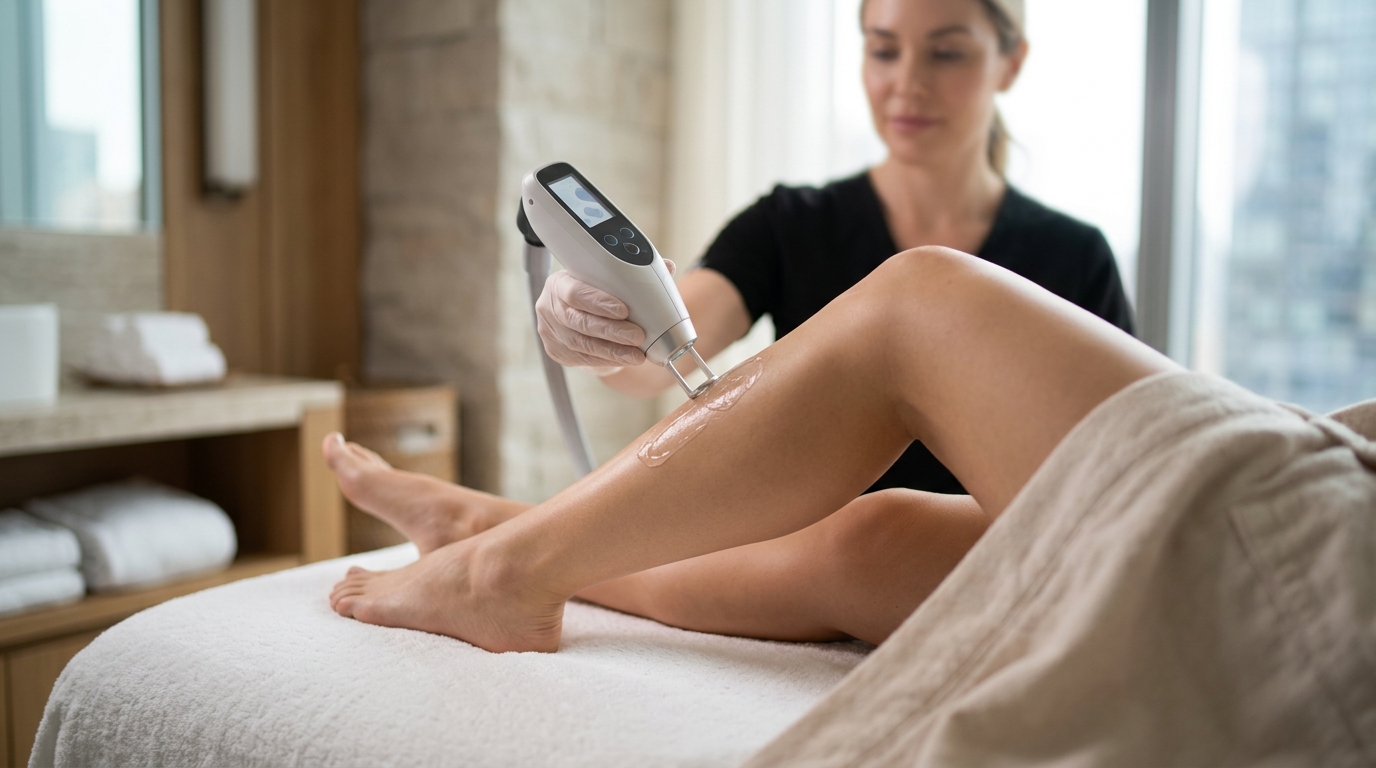
The actual procedure follows a strict clinical sequence. Your technician will apply a specialized conductive gel to optimize light transmission. The device emits controlled light pulses that travel through the skin surface. Laser hair removal is a targeted photothermal procedure that disables hair follicles using concentrated light energy. You will feel a quick snapping sensation with each pulse. The technician adjusts the fluence and pulse duration based on your real-time skin response. This dynamic calibration ensures consistent results across uneven body contours. Dermatological research

Post-Treatment Care and Recovery Guidelines
Recovery protocols dictate long-term success and skin health. Your provider will apply a soothing barrier cream immediately after the session. You must avoid hot water, harsh exfoliants, and direct sunlight for seventy-two hours. Sensitive skin is a dermatological classification marked by heightened reactivity, frequent redness, and accelerated irritation thresholds. Applying a broad-spectrum sunscreen daily prevents post-inflammatory hyperpigmentation. You may experience mild swelling or perifollicular edema, which typically resolves within a few hours. Do not pick at any crusting, as this increases infection risks. Clinical trials
Scheduling Maintenance Sessions for Lasting Results
Hair growth cycles dictate your treatment frequency. Active anagen phase hairs absorb laser energy most effectively. Most patients require six to eight initial sessions spaced four to six weeks apart. Your provider will map your growth patterns to optimize each visit. You can schedule your next appointment directly through our contact page to secure your preferred time slot. Occasional touch-up sessions may be necessary to address hormonal fluctuations or dormant follicles. You can also explore our hair restoration options if you experience concurrent thinning in treated zones.
Comparing Treatment Modalities for Sensitive Zones
| Technology Type | Best For | Sensitivity Rating | Recommended Sessions |
|---|---|---|---|
| Diode Laser | Large surface areas and coarse hair | Low to Moderate | 6 to 8 |
| Nd:YAG Laser | Darker skin tones and delicate zones | Very Low | 8 to 10 |
| Intense Pulsed Light | Superficial hair and mild pigmentation | Moderate | 4 to 6 |
| Radiofrequency Microneedling | Stubborn follicles and skin texture | Low | 3 to 5 |
Key Takeaways
- Accurate Fitzpatrick skin typing prevents adverse thermal reactions during treatment.
- Shaving twenty-four hours before your appointment preserves the follicle root.
- Integrated cooling mechanisms significantly reduce discomfort on reactive skin.
- Active anagen phase hairs absorb laser energy most effectively.
- Strict sun avoidance for four weeks prior ensures optimal safety.
- Post-inflammatory hyperpigmentation risk drops significantly with proper aftercare.
- Touch-up sessions address dormant follicles and hormonal fluctuations.
Frequently Asked Questions
How many sessions are typically required for sensitive skin?
Most patients require six to ten sessions spaced four to six weeks apart. Sensitive skin often reacts more slowly to thermal energy, requiring slightly longer intervals between visits. Your provider will adjust the pulse duration to accommodate your specific tolerance levels.
Can laser hair removal cause permanent damage to delicate skin?
When performed by certified professionals using calibrated devices, the procedure is highly safe. Photothermolysis is a scientific mechanism that converts light energy into controlled heat to destroy specific tissue structures. Modern safety protocols prevent collateral damage to surrounding healthy tissue.
What should I avoid using on my skin before treatment?
You must discontinue retinoids, glycolic acid, and salicylic acid five days before your appointment. These ingredients thin the outer skin layer and increase photosensitivity. Your provider will recommend a gentle, fragrance-free cleanser for your pre-treatment routine.
Is laser hair removal safe for the bikini and underarm areas?
Yes, these high-friction zones respond exceptionally well to targeted light therapy. Technicians use specialized handpieces to navigate curved anatomical contours safely. You can learn more about our specialized protocols by visiting our about page for detailed service descriptions.
How long does the recovery period last?
Minor redness typically resolves within two to four hours. You may experience slight swelling that mimics a mild sunburn. Applying a cool compress and avoiding tight clothing accelerates the healing process. Most patients return to their daily routines immediately after treatment.
Can I combine laser treatments with other aesthetic procedures?
Certain combinations require careful scheduling to prevent cumulative irritation. Your provider will recommend spacing facial peels or microneedling sessions by at least two weeks. Coordinated treatment planning ensures optimal results without compromising your skin barrier.
What happens if I miss a scheduled maintenance appointment?
Missing a session simply delays the finalization of your treatment plan. Your provider will reschedule your appointment to maintain the optimal growth cycle window. Consistent scheduling remains the most critical factor for achieving permanent reduction.
Schedule Your Consultation Today
Take the first step toward lasting confidence with a customized treatment plan. Our certified specialists will evaluate your unique skin profile and recommend the optimal device settings. You can book your personalized consultation directly through our contact page. Visit our blog for additional educational resources. Contact our team at 212-901-0656 to secure your appointment and begin your journey toward smoother, healthier skin.