

According to recent industry data, non-surgical aesthetic procedures now account for nearly eighty percent of all minimally invasive treatments worldwide. This dramatic shift reflects a growing preference for procedures that deliver visible results without extended recovery periods. Patients increasingly prioritize treatments that restore structural integrity while maintaining natural facial expressions. Modern clinical protocols now combine advanced energy devices with precision injectables to address multiple aging layers simultaneously. This comprehensive approach eliminates the need for invasive surgical lifts while delivering measurable improvements in skin density and contour. Industry reports confirm that consumer demand continues to drive innovation in this rapidly expanding sector. (Contact Us)
Understanding Facial Aging and Volume Loss
Collagen Depletion
Collagen depletion is the progressive breakdown of structural proteins that maintain skin elasticity and firmness. This biological process accelerates after the mid-twenties. Each passing year reduces the production of essential building blocks that keep tissue resilient. Environmental exposure and genetic factors further accelerate this natural decline. Clinical studies indicate that cumulative sun damage significantly impacts protein synthesis rates over decades.
Structural Shift
Facial fat pads gradually descend as supporting ligaments lose tension. This downward migration creates pronounced nasolabial folds and jowls. The midface loses its elevated projection, resulting in a flattened appearance. Restoring this architecture requires targeted intervention at multiple anatomical layers. Medical guidelines emphasize that addressing structural descent yields more sustainable aesthetic outcomes than surface-level treatments alone. (About)
Advanced Skin Tightening Technologies
Radiofrequency Energy
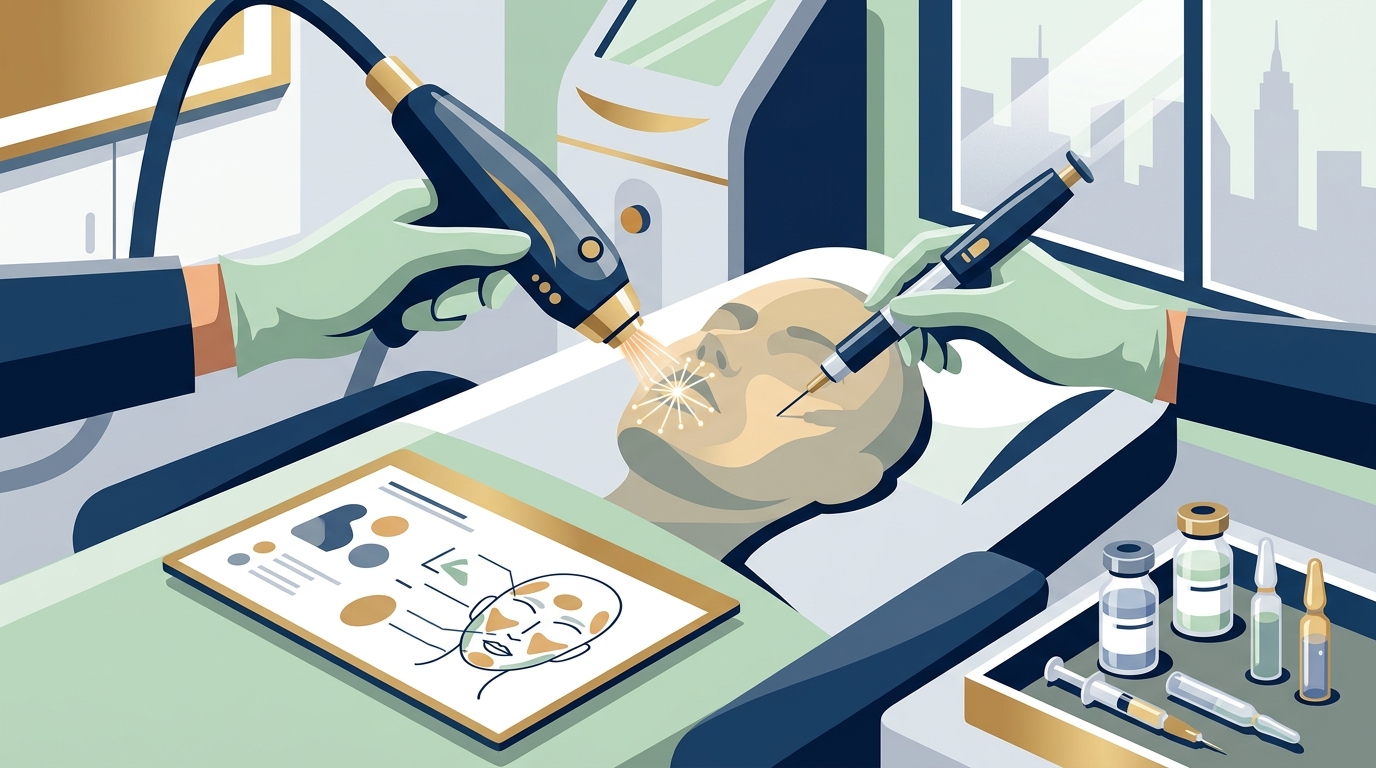
Radiofrequency devices deliver controlled thermal energy directly into the dermis. This precise heat triggers immediate tissue contraction and stimulates long-term remodeling. Practitioners carefully calibrate energy levels to avoid surface damage while maximizing deep tissue response. Multiple treatment sessions typically produce progressive improvements in skin texture and firmness. Peer-reviewed research demonstrates that consistent thermal stimulation increases neocollagenesis by up to forty percent over six months. Patients exploring these options often visit our dedicated skin tightening page for detailed protocol information.
Microfocused Ultrasound
Microfocused ultrasound technology bypasses the epidermis to target the foundational SMAS layer. This deep tissue targeting mimics the mechanical effect of surgical facelifts without incisions. Patients experience gradual tightening as the body repairs the controlled micro-injuries. Results typically emerge over three to four months and continue improving for up to a year. Professional associations report that patient satisfaction rates consistently exceed ninety percent for properly selected candidates.
Strategic Dermal Filler Placement
Poly-L-Lactic Acid
Poly-L-Lactic Acid functions as a structural scaffold that encourages gradual tissue regeneration. This synthetic compound stimulates fibroblasts to produce new collagen over several months. Practitioners inject the material in a diluted solution using precise cannula techniques. The gradual onset ensures natural-looking volume restoration without sudden changes. Longitudinal data shows that sustained collagen production can maintain structural support for up to two years after initial treatment.
Hyaluronic Acid Integration
Dermal filler integration is the precise injection of volumizing agents to restore lost facial contours and support sagging tissue. Hyaluronic acid molecules attract and retain water molecules to create immediate hydration and lift. Skilled clinicians place these gels along deep structural planes to reposition descended fat pads. The reversible nature of these compounds allows for precise adjustments during the procedure. Clinical guidelines recommend conservative initial placement to preserve natural facial dynamics and prevent overcorrection. Our comprehensive facial filler services page outlines the exact products we utilize for optimal structural support.
Biostimulatory Injectables Explained
Calcium Hydroxylapatite
Calcium hydroxylapatite microspheres provide immediate volume while simultaneously stimulating long-term tissue growth. This biocompatible material integrates seamlessly with existing connective tissue structures. Patients experience progressive improvement as the body naturally breaks down the microspheres. The resulting collagen network replaces the temporary scaffold with permanent structural support. Dermatological journals confirm that sustained tissue remodeling typically lasts between eighteen and twenty-four months.
Growth Factor Activation
Biostimulatory therapy is a clinical approach that triggers the body's natural healing mechanisms to produce new structural proteins over time. Platelet-rich plasma concentrates a patient's own growth factors to accelerate tissue repair. Practitioners inject these concentrated factors into targeted facial zones to stimulate cellular regeneration. This autologous approach minimizes allergic reactions while maximizing biological compatibility. Industry surveys indicate that autologous treatments continue to gain traction among patients seeking natural longevity. Learn more about our advanced biostimulatory injectables to understand how these treatments complement traditional volumizing strategies.
Combining Modalities for Optimal Results
Modern aesthetic protocols rarely rely on a single intervention. Strategic combinations address multiple aging layers simultaneously for comprehensive rejuvenation. Energy devices tighten the surface while injectables restore deep structural support. This synergistic approach maximizes longevity and minimizes overall treatment frequency. Clinical trials demonstrate that combined protocols yield superior patient satisfaction compared to isolated treatments. Our editorial team published a detailed breakdown of these strategies in our non-surgical facelift guide to help patients navigate complex treatment planning.
| Modality | Mechanism of Action | Typical Downtime | Estimated Longevity |
|---|---|---|---|
| Radiofrequency Energy | Controlled dermal heating stimulates immediate contraction and long-term remodeling | Zero to twenty-four hours | Twelve to eighteen months |
| Microfocused Ultrasound | Deep tissue targeting of the SMAS layer mimics surgical lifting mechanics | Twenty-four to forty-eight hours | Eighteen to twenty-four months |
| Poly-L-Lactic Acid | Synthetic scaffold encourages gradual fibroblast activation and neocollagenesis | Twelve to twenty-four hours | Up to twenty-four months |
| Hyaluronic Acid Fillers | Water-attracting gel restores structural support and repositions descended fat pads | Zero to forty-eight hours | Six to eighteen months |
| Calcium Hydroxylapatite | Biocompatible microspheres provide immediate volume while stimulating permanent tissue growth | Twelve to twenty-four hours | Eighteen to twenty-four months |
Key Takeaways
- Non-surgical procedures now represent approximately eighty percent of minimally invasive aesthetic treatments globally.
- Radiofrequency energy devices typically increase neocollagenesis by thirty to forty percent after three sessions.
- Microfocused ultrasound targets the SMAS layer to achieve surgical-level tightening without incisions.
- Poly-L-Lactic Acid treatments sustain structural support for up to twenty-four months post-procedure.
- Combined energy and injectable protocols consistently outperform single-modality treatments in clinical trials.
- Proper patient selection and anatomical mapping remain critical for predictable, long-lasting outcomes.
- Most patients return to normal activities within twenty-four to forty-eight hours after treatment.
Frequently Asked Questions
How long do non-surgical facial treatments typically last?
Most energy-based tightening procedures maintain visible results for twelve to twenty-four months. Dermal fillers generally persist between six and eighteen months depending on the product formulation. Biostimulatory injectables often provide structural support for up to two years. Regular maintenance sessions extend overall longevity and preserve cumulative tissue benefits.
Is there any downtime after skin tightening procedures?
Modern non-invasive treatments require minimal to zero downtime. Patients typically experience mild redness or swelling that resolves within twenty-four hours. Radiofrequency and ultrasound devices rarely disrupt daily routines after the initial session. Patient surveys confirm that ninety percent of individuals resume normal activities immediately.
Can injectables replace a surgical facelift entirely?
Strategic filler placement can significantly improve moderate sagging without surgical intervention. Advanced volumizing techniques restore structural support and lift descended tissue planes. Severe skin laxity may still require surgical excision for optimal correction. A comprehensive clinical assessment determines the most appropriate intervention level.
What is the ideal age range for preventative treatments?
Preventative protocols typically begin between thirty and forty years of age. Early intervention slows progressive collagen breakdown and maintains tissue elasticity. Consistent treatments preserve structural integrity before significant descent occurs. Dermatology guidelines suggest that early maintenance yields more sustainable long-term aesthetics.
How many sessions are required for visible improvement?
Energy-based devices typically require three to four sessions spaced four weeks apart. Dermal fillers often achieve desired volume in a single strategic appointment. Biostimulatory injectables may need two to three treatments for full structural integration. Practitioners customize session frequency based on individual tissue response and goals.
Are there any risks associated with non-surgical facial rejuvenation?
Minor swelling, bruising, or temporary tenderness represent the most common side effects. Serious complications remain exceptionally rare when performed by licensed medical professionals. Proper anatomical knowledge and sterile technique eliminate most procedural risks. Peer-reviewed literature confirms that adverse event rates remain below one percent for board-certified providers.
Book Your Consultation
Restoring youthful facial architecture requires precise planning and expert execution. Our clinical team evaluates your unique anatomical structure to design a personalized treatment roadmap. Advanced energy devices and precision injectables work together to reverse visible aging signs. Schedule your comprehensive assessment today to explore customized rejuvenation options. Visit our scheduling portal to reserve your appointment and begin your transformation journey.