
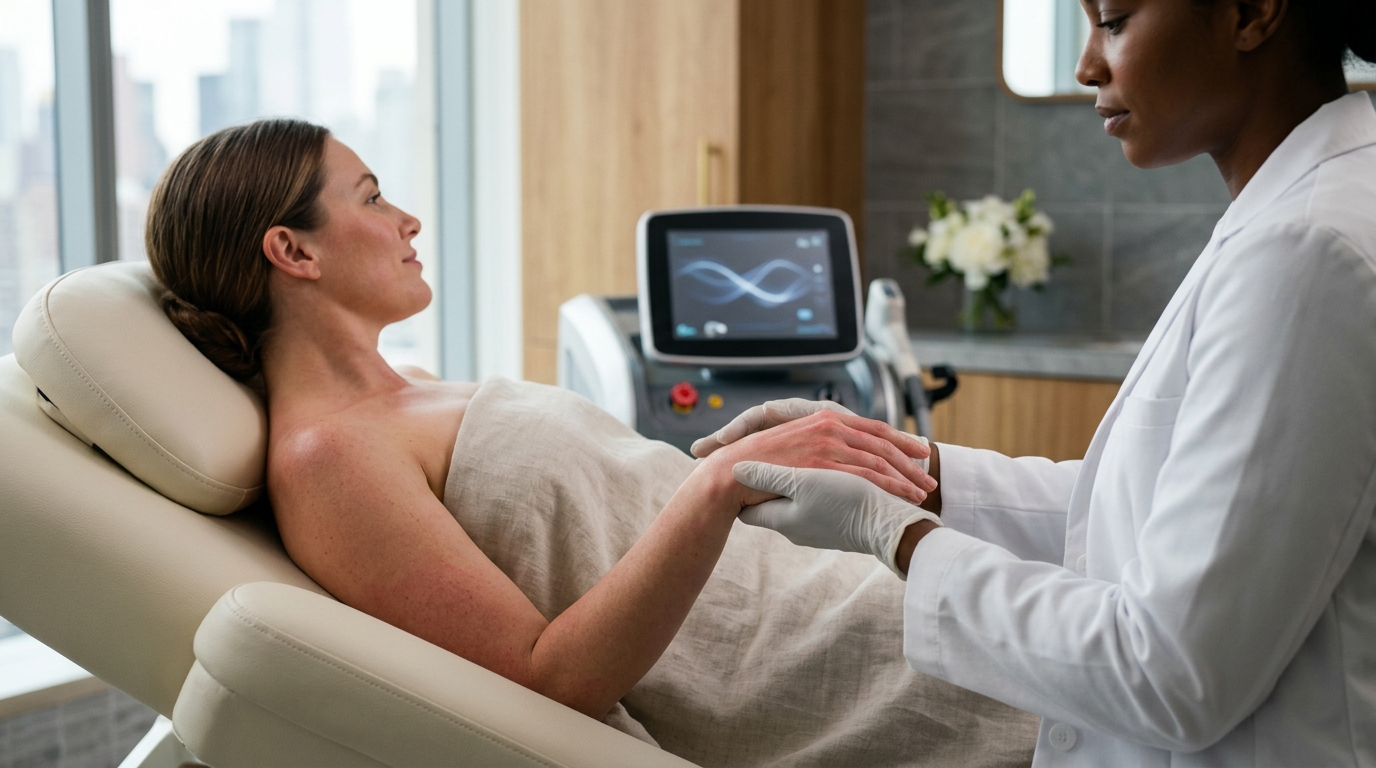
Recent clinical data indicates that approximately thirty percent of adults experience heightened skin reactivity during cosmetic procedures. Clinical data confirms that sensitive skin requires specialized protocols to prevent adverse reactions. You must follow a structured preparation and treatment sequence to achieve safe results. This guide outlines the exact steps required to minimize irritation while maximizing follicle destruction. We will cover consultation requirements, pre-treatment protocols, device selection, post-care routines, and maintenance schedules. Following these steps ensures optimal outcomes without compromising your skin barrier.
Initial Consultation and Skin Assessment
Epilation is the complete removal of hair from the root. A thorough consultation establishes your baseline skin type and hair density. Book a consultation to review your medical history and current skincare regimen. Practitioners evaluate your Fitzpatrick skin scale rating to determine safe energy parameters. You must disclose all topical medications, especially retinoids and chemical exfoliants. These ingredients increase photosensitivity and raise complication risks. Your provider will map the treatment zones and calculate the required session count. This assessment phase prevents unnecessary discomfort and ensures precise targeting.
Key Assessment Metrics
Dermatology is the medical specialty focused on skin health and cosmetic procedures. Specialists measure hair thickness, color contrast, and growth cycles. Darker hair absorbs laser energy more efficiently than blonde or gray variants. Lighter skin tones generally tolerate higher fluence levels without burning. Your provider will document baseline photos to track progress accurately. This documentation creates a reliable reference for future adjustments.
Preparation Protocol and Skin Readiness
Photothermolysis is a targeted thermal injury technique used to destroy follicles. Proper preparation reduces inflammation and accelerates healing. You must avoid sun exposure for at least two weeks before your appointment. Tanned skin competes for laser energy and increases burn risks. Recent studies demonstrate that pre-treatment cleansing significantly lowers infection rates. Your provider will cleanse the area with a medical-grade antiseptic solution. You must shave the target zone twenty-four hours before treatment. Plucking or waxing removes the follicle structure and renders the procedure ineffective. Applying a numbing cream thirty minutes prior reduces discomfort during high-fluence sessions. This preparation phase ensures optimal energy absorption and minimizes downtime.
Pre-Treatment Restrictions
Average results improve when patients follow strict pre-care guidelines. You must discontinue all exfoliating acids and physical scrubs five days prior. Alcohol-based toners and fragrant moisturizers should be avoided entirely. These products compromise the stratum corneum and increase sensitivity. Your provider will verify that your skin is completely dry and free of oils. This verification step prevents energy scattering and ensures precise delivery.
Device Selection and Wavelength Calibration
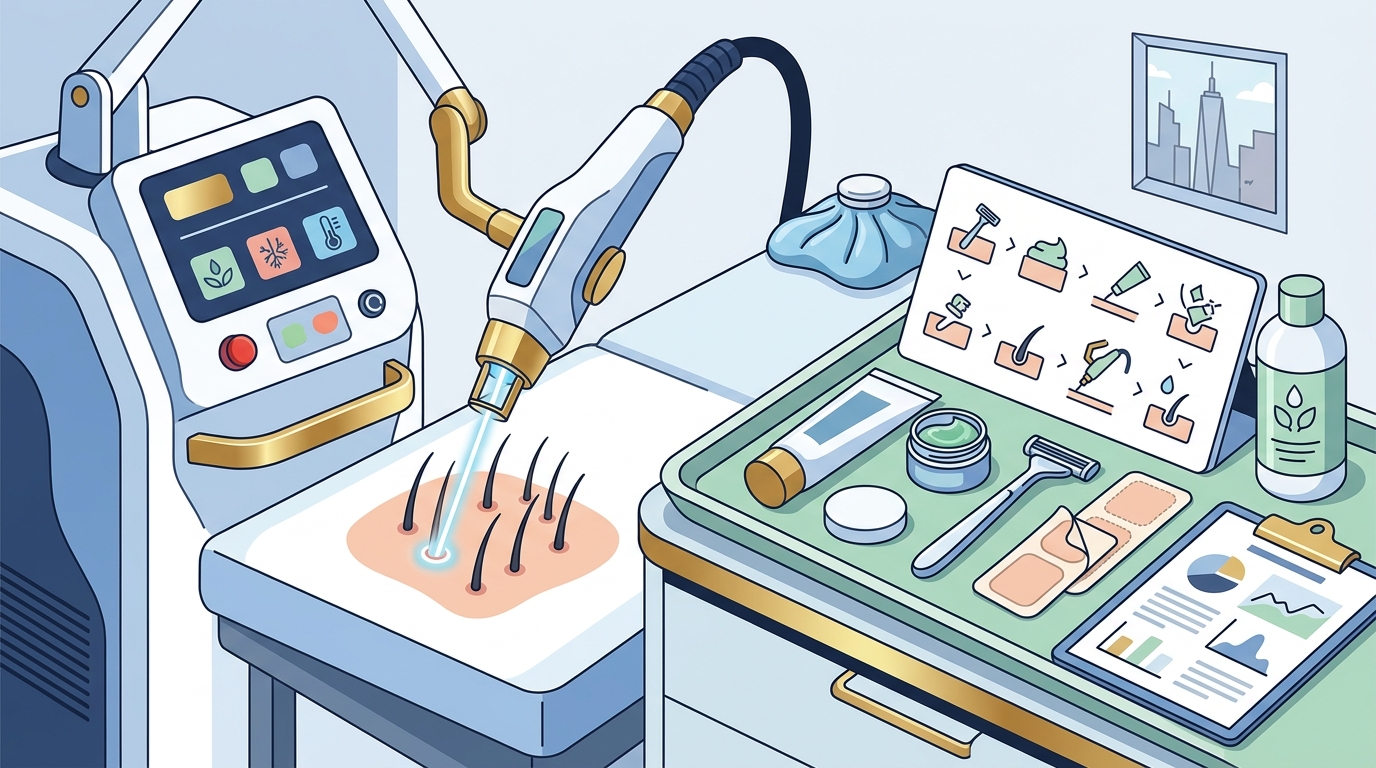
Major reports from dermatology journals confirm that diode and alexandrite lasers offer superior safety for reactive skin types. Explore our laser services to learn about our specific equipment. Practitioners select longer wavelengths to bypass melanin in the epidermis. This strategy protects the outer skin layers while targeting deeper follicles. Cooling systems integrate directly into the handpiece to maintain surface temperature. Contact cooling, cryogen spray, and air cooling all serve distinct purposes. Your provider will calibrate pulse duration to match your hair growth cycle. Shorter pulses prevent thermal damage to surrounding tissue. This calibration phase maximizes efficacy while preserving skin integrity.
Technology Comparison
Recent studies indicate that fractional cooling reduces post-treatment erythema by nearly forty percent. Recent studies also highlight that adaptive pulse control prevents overheating. Your provider will perform a test patch on a discreet area first. This test confirms your skin response before treating larger zones. You will observe immediate follicle swelling and mild redness. This reaction confirms proper energy delivery and validates the settings.
Treatment Execution and Comfort Management
Major reports emphasize that multiple sessions are required to address all active follicles. View treatment packages to understand session scheduling and cost structures. Practitioners move the handpiece in overlapping grid patterns to ensure complete coverage. Each pulse delivers a precise energy burst that converts to heat. The heat damages the bulb and papilla to prevent regrowth. You will feel a quick snapping sensation similar to a rubber band. Your provider will adjust fluence levels based on your comfort threshold. This adjustment phase ensures consistent results without excessive pain. Most facial treatments require four to six sessions. Body zones typically require six to eight sessions for complete clearance.
In-Session Protocols
Average results depend heavily on consistent session spacing. CDC guidelines recommend spacing appointments four to six weeks apart. This interval allows dormant follicles to enter the active growth phase. Your provider will document progress after each visit. You will notice gradual thinning and slower regrowth patterns. This gradual process confirms successful follicle destruction over time.
Post-Care Maintenance and Long-Term Results
Major reports confirm that strict aftercare prevents hyperpigmentation and scarring. Read our sensitive skin guide for detailed aftercare instructions. You must apply a broad-spectrum sunscreen daily to protect healing tissue. UV exposure reverses treatment progress and triggers melanin production. Your provider will recommend a gentle, fragrance-free moisturizer to restore barrier function. You must avoid hot showers, saunas, and intense exercise for forty-eight hours. Heat exposure exacerbates inflammation and delays recovery. You should expect mild redness and swelling to subside within twenty-four hours. This recovery phase requires patience and strict adherence to post-care rules. Long-term maintenance involves occasional touch-up sessions every six to twelve months. This schedule preserves your results and prevents dormant follicle activation.
Recovery Timeline
Recent studies show that proper moisturization reduces recovery time by nearly thirty percent. Clinical data supports the use of ceramide-based creams to accelerate healing. You must avoid picking at any crusted areas to prevent scarring. Your provider will schedule follow-up assessments to monitor progress. This monitoring phase ensures consistent improvement and adjusts parameters as needed.
Treatment Option Comparison
| Device Type | Best For | Sensitivity Rating | Session Count |
|---|---|---|---|
| Diode Laser | Dark hair, light to medium skin | Low to Moderate | 4-6 sessions |
| Alexandrite Laser | Fine hair, fair skin | Moderate | 6-8 sessions |
| Nd:YAG Laser | Darker skin tones, high sensitivity | Very Low | 6-10 sessions |
Key Takeaways
- Epilation is the complete removal of hair from the root, requiring multiple sessions for permanent reduction.
- Consultation and skin assessment establish safe energy parameters and prevent adverse reactions.
- Preparation protocols include sun avoidance, shaving, and medical-grade cleansing to optimize results.
- Device selection relies on wavelength calibration and integrated cooling systems to protect sensitive tissue.
- Treatment execution requires overlapping grid patterns and adaptive pulse control for consistent follicle destruction.
- Post-care maintenance involves daily sunscreen application, gentle moisturization, and heat avoidance to prevent complications.
- Long-term results depend on consistent session spacing and occasional touch-up appointments to maintain clearance.
Frequently Asked Questions
Can laser hair removal cause permanent damage to sensitive skin?
No, when performed by certified professionals using calibrated devices, laser treatment does not cause permanent damage. Proper wavelength selection and cooling mechanisms protect the epidermis while targeting follicles. Your provider will conduct a test patch to verify tolerance before full treatment.
How many sessions are typically required for complete clearance?
Most patients require six to eight sessions to achieve complete hair reduction. This number varies based on hair thickness, color, and growth cycle alignment. Your provider will create a customized schedule to maximize efficiency.
Is shaving required before every appointment?
Yes, shaving is required twenty-four hours before each session. Plucking or waxing removes the follicle structure and renders the procedure ineffective. Shaving leaves the root intact while removing surface hair for optimal energy absorption.
What should I expect during the recovery period?
Mild redness and swelling typically subside within twenty-four hours. You must apply sunscreen daily and avoid heat exposure to prevent complications. Your provider will recommend gentle moisturizers to restore barrier function quickly.
Can I combine laser treatment with other skincare procedures?
Your provider will schedule other procedures to avoid overlapping irritation. Chemical peels and microdermabrasion should be spaced at least two weeks apart. This separation prevents cumulative stress on your skin barrier and ensures optimal healing.
How do I maintain results after completing my treatment series?
Occasional touch-up sessions every six to twelve months preserve your results. These sessions target any dormant follicles that enter the active growth phase. Consistent sun protection and gentle skincare routines support long-term clearance.
Schedule Your Sensitive Skin Laser Consultation
Ready to begin your treatment journey? Book your consultation today to discuss your specific skin concerns and treatment goals. Our certified practitioners will design a customized protocol to ensure safe, effective results. Visit perfectmedspa.com to explore our full range of services and pricing options. Take the first step toward confident, hair-free skin with professional guidance.