

Facial aging is a natural biological process, yet the desire to maintain a youthful appearance drives millions of individuals toward advanced aesthetic interventions. According to the American Society of Plastic Surgeons, non-surgical cosmetic procedures have seen a consistent upward trajectory in patient volume over the last decade, reflecting a cultural shift toward preventative and minimally invasive care. This trend highlights a growing preference for treatments that offer significant results with minimal downtime compared to traditional facelifts. Understanding the specific mechanisms of skin laxity and volume depletion is the first step toward selecting the right clinical pathway.
Understanding the Cause of Facial Aging
To effectively address sagging skin, one must first understand the physiological changes occurring beneath the surface. Facial volume loss is the gradual depletion of subcutaneous fat pads and bone resorption that occurs with age. As these structural supports diminish, the overlying skin loses its foundation, leading to drooping and laxity. Simultaneously, the production of collagen and elastin slows down, reducing the skin's ability to snap back into place.
This dual process creates a cycle of aging that is difficult to reverse with topical creams alone. The dermis, which provides structural integrity, becomes thinner and less elastic. Without intervention, gravity exacerbates these changes, leading to jowls, nasolabial folds, and a general loss of facial definition. Recognizing these root causes allows patients to target specific layers of the skin with precision-based medical treatments.
Collagen Stimulation Technologies
Modern aesthetic medicine focuses heavily on stimulating the body's natural healing response to rebuild structural support. These technologies work by creating controlled micro-injuries or thermal energy delivery to the deep dermal layers, prompting fibroblasts to produce new collagen.
Morpheus8 and Radiofrequency Microneedling
Morpheus8 represents a significant advancement in this field by combining microneedling with radiofrequency energy. This device delivers fractional RF energy deep into the skin, tightening the tissue from within while resurfacing the outer layer. It is particularly effective for treating moderate skin laxity on the face and neck. The treatment targets the subdermal adipose layer, which helps in contouring the face while simultaneously improving skin texture.
Ultherapy and Focused Ultrasound
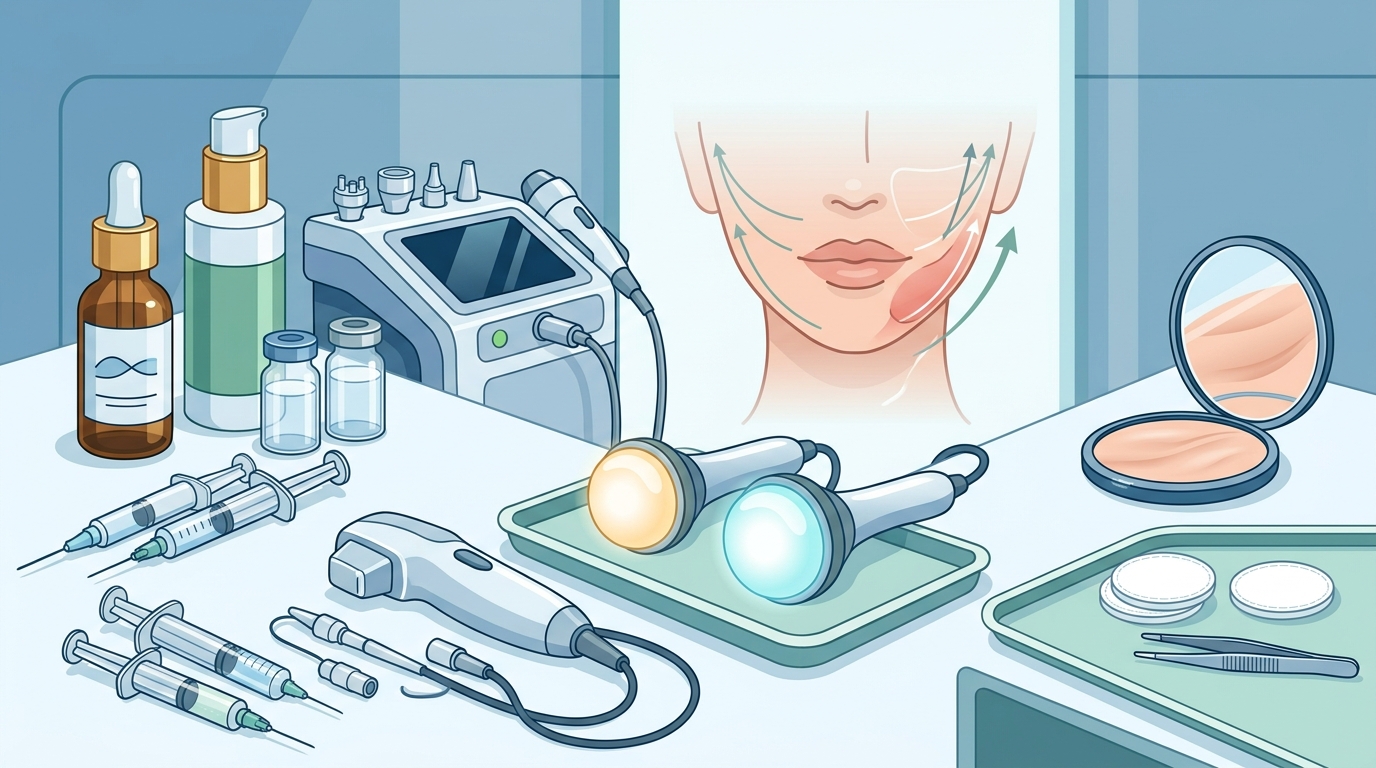
Ultherapy uses focused ultrasound energy to target the foundational layer of tissue typically addressed in a surgical facelift. By delivering precise thermal coagulation points below the skin's surface, it triggers a natural tightening response without damaging the epidermis. This non-invasive approach is ideal for patients seeking a non-surgical brow lift or neck lift. The results develop gradually over three to six months as new collagen forms.
Volume Restoration Methods
Restoring lost volume is critical for reversing the aged appearance. When fat pads shrink, the skin collapses inward, creating hollows and deep lines. Dermal fillers and biostimulators are the primary tools for this restoration.
Dermal Fillers and Hyaluronic Acid
Hyaluronic acid fillers are gel-like substances injected beneath the skin to add volume and hydrate the tissue. They are commonly used to restore fullness to the cheeks, lips, and under-eye areas. These fillers also attract water molecules, which helps to plump the skin and smooth out wrinkles. The results are immediate, though they are temporary, typically lasting between six to twelve months depending on the product used.
Sculptra and Biostimulatory Fillers
Sculptra is a unique injectable that does not just fill space but stimulates the body to produce its own collagen. It contains poly-L-lactic acid, which acts as a scaffold for new tissue growth. This makes it an excellent option for patients with significant volume loss who desire a more natural, gradual result. Unlike traditional fillers, Sculptra treatments often require multiple sessions to achieve optimal contouring. The effects can last up to two years, making it a cost-effective long-term solution for facial rejuvenation.
Skin Tightening Procedures
Beyond collagen stimulation and volume replacement, direct skin tightening technologies offer immediate improvements in laxity. These procedures use energy-based devices to heat the skin layers, causing immediate contraction and long-term remodeling.
Fotona 4D Facelift
The Fotona 4D is a multi-step laser treatment that addresses all four layers of the skin. It combines Er:YAG and Nd:YAG lasers to resurface the skin, tighten the mucosa, and stimulate deep collagen. This non-surgical facelift is known for its ability to tighten the jawline and reduce nasolabial folds. The procedure is gentle and requires little to no downtime, making it a popular choice for busy professionals.
Venus Legacy and RF Tightening
Venus Legacy uses multipolar radiofrequency and pulsed electromagnetic fields to heat the deep layers of the skin. This heat stimulates collagen production and improves blood circulation, leading to tighter, firmer skin. It is effective for treating both the face and body, including areas like the abdomen and thighs. The treatment is painless and can be performed in a series of sessions for cumulative results.
Comparing Treatment Options
Selecting the right treatment depends on the severity of sagging, the desired outcome, and the patient's budget. The table below summarizes the key characteristics of the primary non-surgical options available.
| Treatment | Primary Mechanism | Best For | Downtime | Duration of Results |
|---|---|---|---|---|
| Morpheus8 | RF Microneedling | Texture and mild laxity | 1-3 days | 12-18 months |
| Ultherapy | Focused Ultrasound | Brow lift and neck tightening | None | 12-24 months |
| Sculptra | Collagen Biostimulation | Volume loss and deep folds | Minimal | Up to 24 months |
| Fotona 4D | Laser Energy | Overall facial rejuvenation | None | 12-18 months |
| Venus Legacy | RF and EMF | General skin tightening | None | 6-12 months |
Key Takeaways
- Structural Support is Key: Sagging skin is often caused by bone resorption and fat pad loss, requiring volume restoration alongside tightening.
- Sculptra Offers Longevity: This biostimulatory filler can provide results lasting up to two years by encouraging natural collagen production.
- Ultherapy Targets Deep Layers: It is one of the few non-invasive treatments approved to lift the brow and neck by targeting the SMAS layer.
- Morpheus8 Combines Benefits: It addresses both skin texture and laxity through deep RF energy delivery.
- Preventative Care Matters: Early intervention with treatments like LED Light Therapy can slow the aging process before significant sagging occurs.
- Combination Therapies Work Best: Most patients achieve optimal results by combining volume fillers with skin tightening devices.
- Professional Assessment is Vital: A consultation with a medical professional ensures the treatment plan matches your specific anatomical needs.
Frequently Asked Questions
How long do non-surgical facelift results last?
Results vary by treatment. Dermal fillers typically last 6-12 months, while collagen stimulators like Sculptra can last up to 2 years. Energy-based treatments like Ultherapy may provide results that last 1-2 years, depending on individual skin quality and aging.
Is there downtime for Morpheus8?
Morpheus8 generally requires 1-3 days of downtime. Patients may experience redness and swelling, similar to a sunburn, which subsides within a few days. Makeup can usually be applied after 24 hours.
Can fillers help with sagging skin?
Yes, but indirectly. Fillers restore volume that supports the skin, reducing the appearance of sagging. For significant laxity, fillers are often combined with tightening treatments like Ultherapy or Morpheus8 for a comprehensive lift.
What is the difference between Botox and fillers?
Botox relaxes muscles to prevent dynamic wrinkles, while fillers add volume to static folds and hollows. They are often used together to address different aspects of facial aging.
Are non-surgical treatments painful?
Most treatments involve minimal discomfort. Topical anesthetics are applied before procedures like Morpheus8 and Ultherapy to ensure patient comfort. Many patients report the sensation as a mild tingling or pressure.
How many sessions of Venus Legacy are needed?
Typically, 4-6 sessions spaced a few weeks apart are recommended for optimal results. Maintenance sessions may be required every 6-12 months to sustain the tightening effects.
Can I treat my neck and jawline non-surgically?
Absolutely. Treatments like Kybella for double chin reduction, Ultherapy for neck tightening, and Morpheus8 for jawline definition are highly effective for these areas.
Schedule Your Consultation
Aging is a natural process, but you do not have to accept sagging skin as an inevitable outcome. With advanced technologies like Morpheus8, Ultherapy, and Sculptra, you can restore volume and tighten skin without the risks and recovery time of surgery. At Perfect Med Spa, our expert team specializes in creating personalized treatment plans that address your unique facial anatomy and aesthetic goals.
Take the first step toward a more youthful, refreshed appearance. Contact us today to schedule your consultation at our NYC or Long Island locations. Discover how our non-surgical solutions can help you achieve your beauty goals with precision and care.