

Choosing the right non-surgical facelift in New York City requires understanding the nuances of laser technology. According to recent aesthetic industry reports, the demand for non-invasive skin tightening has grown by over 20% annually, with patients increasingly seeking alternatives to surgical procedures. Fotona 4D has emerged as a leading contender in this space, but it is not the only option available. This guide breaks down how Fotona 4D compares to other popular treatments like Ultherapy, Morpheus8, and traditional laser resurfacing to help you make an informed decision at Perfect Med Spa. (Contact Our Medical Spa)
What is Fotona 4D?
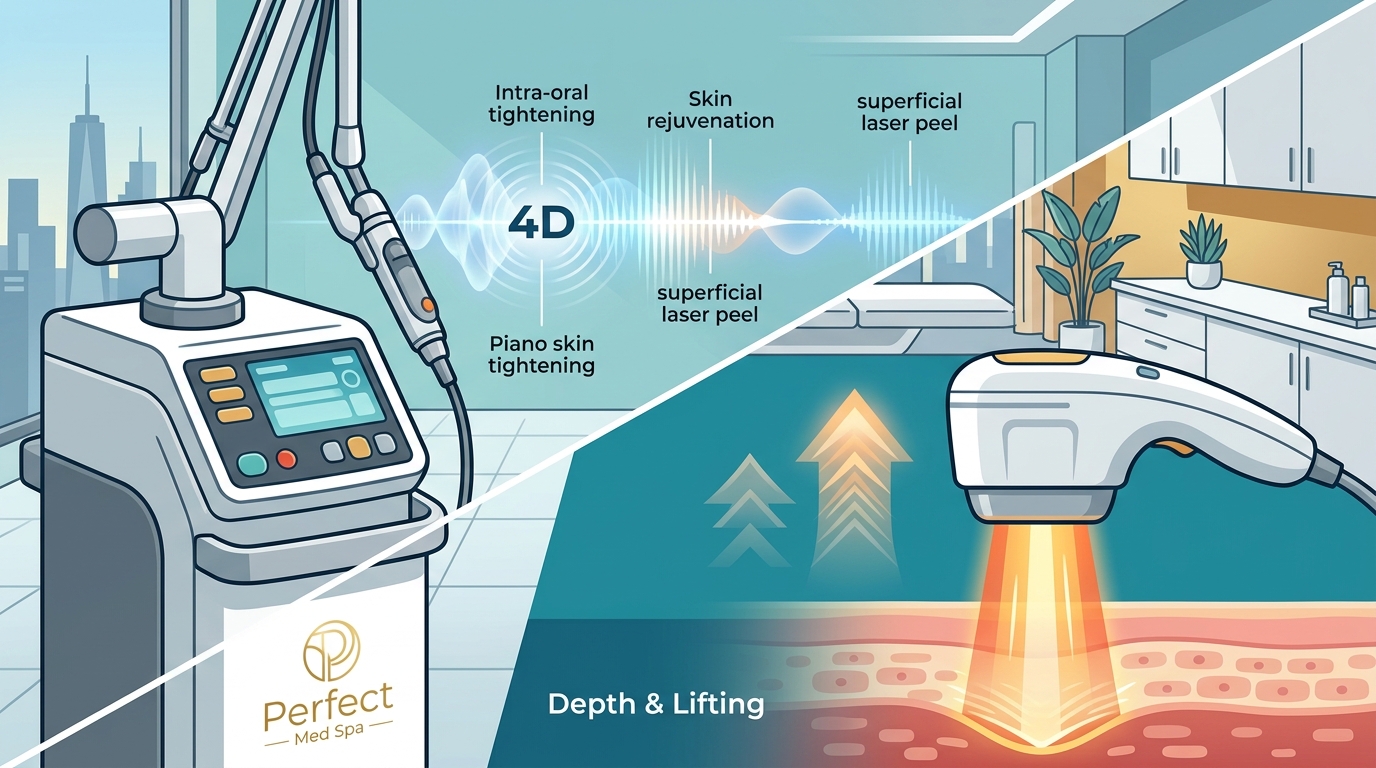
Fotona 4D is a multi-step, non-surgical facial rejuvenation treatment that utilizes four distinct laser wavelengths to target different layers of the skin. The "4D" refers to the four specific modes of treatment: SmoothLiftin, DeepLiftin, FRACTIONAL, and Superficial. This comprehensive approach allows practitioners to address skin laxity, fine lines, and texture issues simultaneously without downtime.
Unlike single-mode devices, Fotona 4D works both inside and outside the mouth (intra- and extra-orally) to tighten the SMAS layer, which is typically targeted in surgical facelifts. This makes it a unique option for patients seeking significant results with minimal recovery time. At Perfect Med Spa, we specialize in customizing these four steps to meet individual skin goals.
Fotona 4D vs. Ultherapy
Ultherapy is perhaps the most well-known non-surgical lifting treatment, using focused ultrasound energy to heat deep tissue layers. While both treatments aim to lift and tighten, their mechanisms and patient experiences differ significantly.
Mechanism of Action
Ultherapy uses ultrasound to create thermal coagulation points deep in the tissue, stimulating collagen production. In contrast, Fotona 4D uses laser energy to heat the skin from the inside out, particularly through the intraoral SmoothLiftin mode. This internal heating approach can provide a more immediate tightening sensation during the treatment.
Pain and Downtime
Ultherapy is often described as having a moderate to high level of discomfort, with some patients experiencing soreness for a few days post-treatment. Fotona 4D is generally considered more comfortable, with many patients reporting only a warm sensation. Furthermore, Fotona 4D has zero downtime, whereas Ultherapy may cause temporary redness or swelling.
Best For
Ultherapy is ideal for patients with moderate to severe laxity who can tolerate more discomfort for potentially longer-lasting results. Fotona 4D is better suited for those seeking a more gradual, natural-looking lift with a focus on skin quality and texture improvement.
Fotona 4D vs. Morpheus8
Morpheus8 is a fractional radiofrequency (RF) microneedling treatment that combines microneedling with RF energy. It is highly effective for skin tightening and contouring but operates differently from Fotona 4D.
Depth and Precision
Morpheus8 delivers RF energy directly into the dermis and subcutaneous fat through microneedles. This allows for precise control over the depth of treatment, making it excellent for body contouring and deep skin tightening. Fotona 4D, being a laser treatment, works more superficially but covers a broader area with its multi-wavelength approach.
Recovery Time
Morpheus8 typically requires 3 to 5 days of recovery, during which patients may experience significant redness, swelling, and pinpoint bleeding. Fotona 4D requires no downtime, allowing patients to return to their daily activities immediately after treatment. This makes Fotona 4D a popular choice for busy New York professionals.
Skin Type Considerations
Morpheus8 is safe for all skin types, including darker skin tones, due to its RF technology. Fotona 4D is also safe for most skin types, but its laser components require careful evaluation by a specialist to ensure optimal results and safety.
Fotona 4D vs. Traditional Laser Resurfacing
Traditional laser resurfacing, such as CO2 or Erbium lasers, is known for its ability to dramatically improve skin texture and reduce wrinkles. However, it comes with significant trade-offs in terms of downtime and recovery.
Downtime and Recovery
Traditional laser resurfacing often requires 7 to 14 days of recovery, with patients experiencing peeling, crusting, and significant redness. Fotona 4D, on the other hand, offers comparable improvements in skin texture and tone with zero downtime. This "lunchtime procedure" aspect is a major advantage for those who cannot afford extended recovery periods.
Results and Longevity
Traditional lasers can provide more dramatic, immediate results for severe sun damage and deep wrinkles. However, these results often require multiple sessions and careful post-care. Fotona 4D provides gradual, cumulative results that can last up to a year or more with proper maintenance. The treatment also improves skin elasticity and hydration, which traditional lasers may not address as comprehensively.
Safety Profile
Traditional lasers carry a higher risk of complications, such as hyperpigmentation, especially in darker skin tones. Fotona 4D has a lower risk profile due to its multi-wavelength approach and the ability to adjust energy levels precisely. At Perfect Med Spa, we prioritize safety and personalized care for every patient.
Key Takeaways
- Fotona 4D offers a unique combination of skin tightening, texture improvement, and zero downtime, making it ideal for busy individuals.
- Ultherapy is best for patients seeking deep tissue lifting and can tolerate moderate discomfort and potential swelling.
- Morpheus8 provides precise RF microneedling for deep tightening and contouring but requires 3-5 days of recovery.
- Traditional Lasers offer dramatic results for severe sun damage but come with significant downtime and higher risk profiles.
- Skin Type plays a crucial role in treatment selection; Fotona 4D and Morpheus8 are generally safer for darker skin tones.
- Results from Fotona 4D are gradual and cumulative, often lasting up to a year with maintenance sessions.
- Consultation is essential to determine the best treatment plan based on individual skin goals and medical history.
Frequently Asked Questions
How many Fotona 4D treatments do I need?
Most patients require 3 to 4 sessions spaced 4 to 6 weeks apart to achieve optimal results. Maintenance treatments may be recommended annually to sustain the effects.
Is Fotona 4D painful?
Fotona 4D is generally well-tolerated. The intraoral treatment may feel warm, but topical anesthetics can be used to enhance comfort. It is significantly less painful than Ultherapy or traditional laser resurfacing.
Can I combine Fotona 4D with other treatments?
Yes, Fotona 4D can be combined with other treatments like Botox, fillers, or PRP for enhanced results. Your provider at Perfect Med Spa will create a customized plan to ensure safety and efficacy.
How long do the results last?
Results from Fotona 4D can last up to a year or more, depending on individual skin condition and lifestyle factors. Regular maintenance sessions can help prolong the effects.
Is Fotona 4D safe for all skin types?
Yes, Fotona 4D is safe for all skin types, including darker skin tones. Its multi-wavelength approach allows for precise adjustment to minimize the risk of hyperpigmentation.
What is the cost of Fotona 4D in NYC?
The cost of Fotona 4D varies based on the number of sessions and individual treatment needs. Perfect Med Spa offers competitive pricing and payment plans to make this treatment accessible. Contact us for a detailed quote.
Can I wear makeup after Fotona 4D?
Yes, you can wear makeup immediately after treatment since there is no downtime. However, it is recommended to avoid heavy makeup for the first few hours to allow the skin to breathe.
Book Your Consultation
Ready to explore the benefits of Fotona 4D in NYC? Schedule a consultation with our expert team at Perfect Med Spa to discuss your skin goals and determine the best treatment plan for you. We serve patients in both our NYC Midtown and Long Island locations. Contact us today to book your appointment and take the first step toward rejuvenated, youthful skin.