

The global aesthetic medicine market generated over twenty billion dollars in revenue during 2024, according to industry reports. This rapid expansion reflects a growing consumer demand for non-surgical interventions that deliver measurable results without extended recovery periods. Patients now prioritize procedures that address multiple aging factors simultaneously, including dynamic wrinkles, volume loss, and textural degradation. Understanding how each modality functions allows you to select the most efficient protocol for your specific anatomical needs. This guide evaluates the leading clinical options available at modern aesthetic clinics. (Contact Us)
Neuromodulators and Dynamic Wrinkles
Neuromodulation is the clinical process of temporarily relaxing facial muscles to reduce dynamic expression lines. Clinicians inject purified botulinum toxin type A into targeted muscle groups to prevent repetitive contraction patterns. This mechanism smooths forehead creases, glabellar lines, and crow's feet within three to fourteen days. The results typically persist for four to six months, requiring consistent maintenance sessions. Patients seeking preventative anti-aging often begin treatments in their late twenties to halt early wrinkle formation. Clinical data shows that consistent neuromodulator use can prevent static lines from becoming permanently etched into the skin matrix.
Dermal Fillers and Volume Restoration
Dermal fillers are injectable gels designed to restore lost facial volume and enhance structural contours. Most modern formulations utilize cross-linked hyaluronic acid, which naturally binds water molecules to create immediate tissue expansion. Practitioners strategically place these substances along the nasolabial folds, marionette lines, and cheekbones to reconstruct youthful facial architecture. The procedure requires minimal downtime, and visible improvements appear immediately after injection. Results generally endure between twelve and eighteen months, depending on the injection site and metabolic rate. Patients prioritizing facial rejuvenation often combine fillers with neuromodulators for synergistic aesthetic outcomes.
Energy-Based Devices and Skin Tightening
Radiofrequency therapy is a non-invasive technology that delivers controlled thermal energy to the deep dermal layers. This targeted heat stimulates fibroblast activity, prompting the body to produce fresh collagen and elastin fibers over several months. Modern fractional laser systems complement radiofrequency by resurfacing the epidermis and reducing pigmentation irregularities. These devices typically require three to five treatment sessions spaced four weeks apart. Clinical studies indicate that energy-based modalities can improve skin elasticity by up to thirty percent after a complete treatment cycle. Patients seeking non-surgical skin tightening benefit from cumulative collagen remodeling without surgical incisions.
IV Therapy and Metabolic Optimization
IV nutrient therapy is a direct intravenous delivery method that bypasses digestive limitations to maximize cellular absorption. Clinicians customize formulations with high-dose vitamin C, glutathione, B-complex vitamins, and trace minerals to support systemic detoxification. This approach accelerates cellular repair processes and enhances overall skin radiance from within. Sessions typically last thirty to forty-five minutes and require no recovery time. Many aesthetic clinics integrate IV protocols alongside procedural treatments to optimize healing timelines and extend treatment longevity. Patients prioritizing holistic wellness often report improved energy levels alongside visible dermatological improvements.
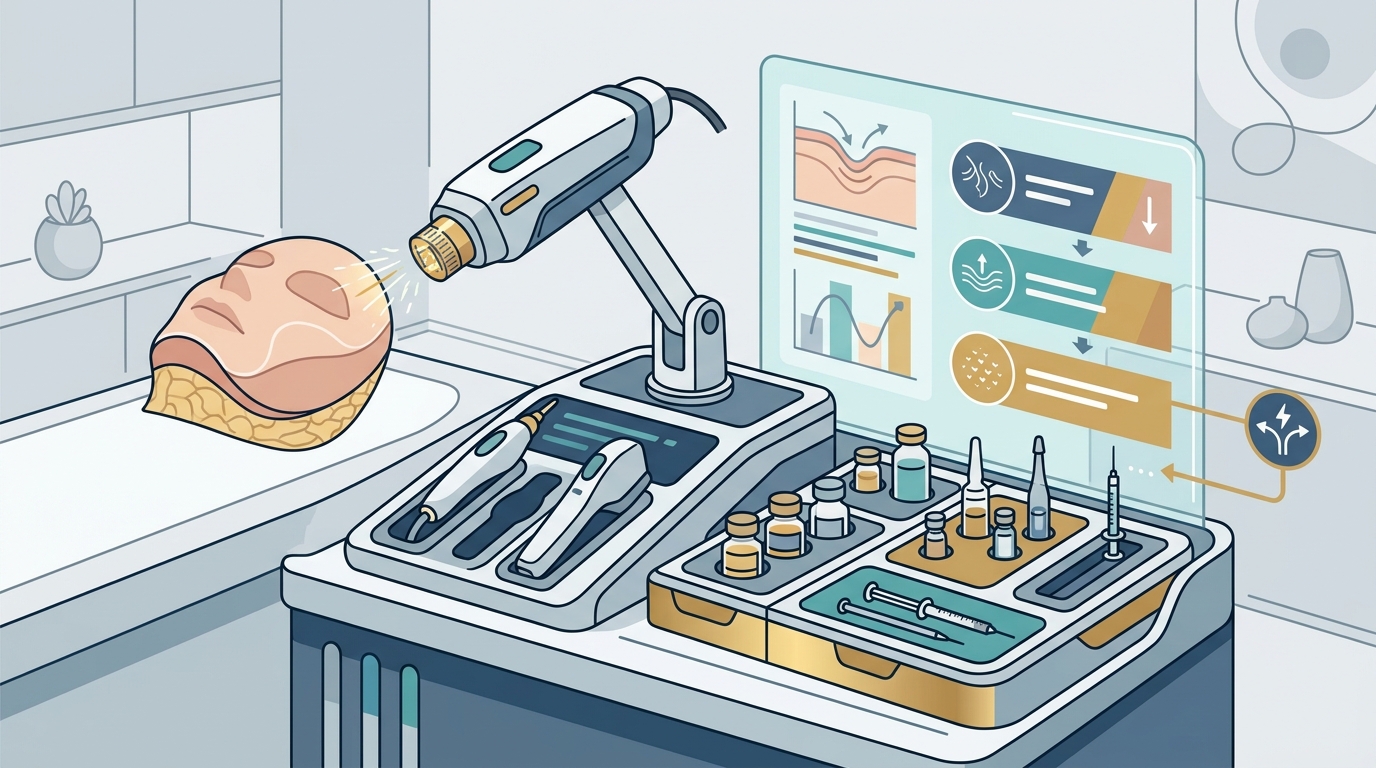
Comparing Treatment Modalities
Selecting the optimal protocol requires evaluating your specific anatomical concerns, budget constraints, and desired longevity. The following matrix outlines the core differences between primary aesthetic interventions.
| Treatment Category | Primary Mechanism | Typical Longevity | Ideal Candidate Profile |
|---|---|---|---|
| Neuromodulators | Muscle relaxation via protein inhibition | Four to six months | Patients with dynamic expression lines |
| Dermal Fillers | Volume replacement via hyaluronic acid | Twelve to eighteen months | Individuals with structural volume loss |
| Radiofrequency | Thermal collagen stimulation | Twelve to twenty-four months | Patients seeking gradual skin tightening |
| IV Therapy | Direct cellular nutrient delivery | Immediate to short-term | Clients pursuing systemic optimization |
Key Takeaways
- Neuromodulators effectively target dynamic wrinkles caused by repetitive muscle movement.
- Hyaluronic acid fillers provide immediate structural restoration with predictable longevity.
- Radiofrequency devices stimulate gradual collagen production without surgical intervention.
- IV nutrient therapy enhances systemic recovery and extends procedural results.
- Combination protocols consistently yield superior aesthetic outcomes compared to single-modality treatments.
- Preventative treatments initiated in the late twenties significantly reduce long-term aging markers.
- Board-certified practitioners ensure optimal safety standards and anatomical precision.
Frequently Asked Questions
How long does recovery take after receiving injectables?
Most patients experience minimal swelling or minor bruising that resolves within two to five days. Clinicians recommend avoiding intense exercise and excessive heat exposure for the first twenty-four hours. Applying cold compresses can significantly reduce post-procedure discomfort.
Can I combine multiple treatments in a single session?
Yes, combining neuromodulators with fillers or energy-based devices is standard practice. Coordinating these procedures allows practitioners to address multiple aging factors simultaneously. Your provider will determine the optimal sequence to maximize safety and efficacy.
Are anti-aging procedures safe for sensitive skin types?
Modern formulations and calibrated energy settings accommodate all Fitzpatrick skin types. Practitioners conduct thorough skin assessments to adjust parameters accordingly. Pre-treatment skincare regimens further minimize irritation risks.
How often should I schedule maintenance appointments?
Maintenance intervals depend on your metabolic rate and the specific treatment selected. Most patients require follow-up sessions every four to six months for neuromodulators. Fillers and energy-based devices typically require annual or biannual evaluations.
What qualifications should I verify before booking a consultation?
Always verify that your provider holds active medical licensure and specialized aesthetic training. Review their before-and-after portfolios to assess consistency and anatomical understanding. Professional certifications from recognized medical boards indicate rigorous educational standards.
Book Your Consultation
Investing in proactive aesthetic care preserves your natural features while maintaining a youthful appearance. Our clinical team conducts comprehensive facial analyses to design personalized treatment roadmaps. Schedule your comprehensive evaluation today by visiting https://perfectmedspa.com/contact to secure your preferred appointment slot.